










Breaking News
 Facilitating Wholesale Digital Asset Settlement
 October 7th special with PROJECTPENS.org on Ben Swann's "America Now"
 Paris is on fire as rioters take over across France
 Trump Refuses Iran's Offer To Bail Out His Presidency
Top Tech News
 Bioinspired robot airdrops into remote waters via morphing wing-sail
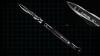 Anduril interceptor adapts to emerging threats via swappable stages
 I Built a Website to Expose Solar and Battery Scams
 Whistleblower Issues Dire Warning: Rogue AI, Hacking Nuclear Programs...
 Multi-material insulation delivers up to 10,000 x the stiffness
 Anduril's plan to save US sub edge from China's undersea surge
 Researchers Develop AI 'Mind-Reading' Tool That Reconstructs What Your Eyes See
 Video: Dexterous robot hand learns the delicate art of silk embroidery
 The computer that can read your mind:
  Seven apps. One craft


How to turn a Raspberry Pi into an FM radio transmitter

The Raspberry Pi (RPi) is an amazing computing platform; it's small, it's cheap, it's fast, and it's remarkably versatile. So versatile in fact that with practically no additional hardware you can turn one into an FM transmitter …
What you'll need is an Raspberry Pi 1 or 2 running Raspbian, and, optionally, a short length of wire as an antenna. For software you'll need one of the following:
PiFm - written in 2012 by Oliver Mattos and Oskar Weigl of the Imperial College Robotics Society PiFm consists of a Python program that loads an executable written in C which does the heavy lifting. Can transmit both mono and stereo audio. Works on all Raspberry Pi 1s.
PiStation - written by Cody J Heiser in mid' 2015, is more sophisticated but via an installer, downloads PiFm and uses that code to drive the hardware. Works on all Raspberry Pi 1s.
PiFMPlay - written by Mikael Jakhelln in August 2014, also uses PiFm. Works on all Raspberry Pi 1s.
fm_transmitter - written by Marcin Kondej in July 2015, is completely written in C and works on both the Raspberry Pi 1 and Raspberry Pi 2. The sound quality is apparently not as good as the PiFm-based programs and while it can read both mono and stereo audio files can only transmit mono.
Pi-FM-RDS by Ginkgo23 originally written in 2012 and updated a couple of months ago to support the Raspberry Pi 2, adds RDS (Radio Data System) generated in real time.
According to the PiFm documentation, the RPi FM transmitter is fairly powerful delivering a signal that can be detected at ranges of 50 meters or more. The RF signal is output on GPIO 4 which is pin 7 on both the 26-pin header on the Raspberry Pi 1A and 1B, and the 40-pin header on the Raspberry 1A+, 1B+ and 2B boards.