










Breaking News
 Still Discriminating
 Nike CEO may have just admitted the company went too woke as stock hits 12-year low
 Will Europe Be Annihilated Over Kaliningrad?
 The Last Asset--You Will Own Nothing
Top Tech News
 Most artificial limbs rely on silicone or plastic to mimic human hands.
 Flying cell tower beams phone signal to Japan from 10 miles up
 Chinese Commercial Reactor Achieves Nuclear Fusion with Clean Hydrogen-Boron Fuel
 Med Beds Just Took a MASSIVE Step Forward, Healing People in Days!
 Palmer Luckey: Autonomous Weapons Are Ancient and Why Anduril Won't Build Humanoids | EP #295
 A laser just photographed objects through six feet of concrete
 Elon Musk's Next-Gen Motor Destroy Entire EV Industry
 China's disputed satellite refueling heralds new space war era
 BYD Will Put Solid-State Batteries In An EV Next Year: Executive
 FDA-cleared exoskeleton puts spinal-cord patients back on their feet



Experimental Investigation on Strength and Durability of Graphene Nanoengineered Concrete
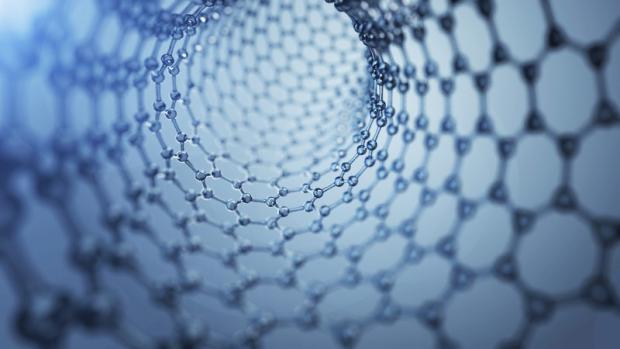
Abstract
Graphene has emerged as one of the most promising nanomaterials because of its unique characteristic of being one of the thinnest yet the strongest material. The strength and durability of a novel surfactant functionalized graphene induced concrete composite has been investigated. The water stabilized graphene dispersion at dosages of 0.5, 0.6, 0.7, 0.8, 0.9, and 1 gm/l were used in concrete composites of nine different mixes. An increase of up to 95%, 55% and 27% is achieved in flexural, tensile and compressive strength respectively due to addition at 1 gm/l dosage of graphene. Vice versa, an increase in water absorption and shrinkage is also observed. The study directs towards yield of a graphene nanoengineered concrete which would be of utmost importance in coming years for a sustainable solution in the construction industry.