










Breaking News
 Russia Hits Ukraine Power Plant Despite "Energy Ceasefire"
 Multi-material insulation delivers up to 10,000 x the stiffness
 Trump Just Started The Debt Spiral
 Look up...
Top Tech News
 Anduril's plan to save US sub edge from China's undersea surge
 Researchers Develop AI 'Mind-Reading' Tool That Reconstructs What Your Eyes See
 Video: Dexterous robot hand learns the delicate art of silk embroidery
 The computer that can read your mind:
 Seven apps. One craft
 SHOCK CASE REPORT: Advanced Alzheimer's Patient Regains Speech, Memory, Mobility...
 Most artificial limbs rely on silicone or plastic to mimic human hands.
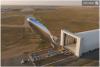 Flying cell tower beams phone signal to Japan from 10 miles up
 Chinese Commercial Reactor Achieves Nuclear Fusion with Clean Hydrogen-Boron Fuel
 Palmer Luckey: Autonomous Weapons Are Ancient and Why Anduril Won't Build Humanoids | EP #295



Boston Fed, MIT unveil model for electronic cash as policymakers mull whether to launch it
The Boston bank's research, conducted in a collaboration with the Massachusetts Institute of Technology, does not offer a recommendation about whether the Fed should create its own digital currency. The central bank's leaders in Washington are in the process of collecting public feedback on that question now, and Federal Reserve Chair Jerome H. Powell said it will only proceed with congressional authorization.
But in the meantime, the Boston team said Thursday that it has solved technical challenges such a product would need to meet. Researchers said they designed a system that can settle the vast majority of payments in less than two seconds, handles more than 1.7 million transactions per second and operates around-the-clock with no service outages in the case of a disruption in its network.