










Breaking News
City by City Being Eaten Alive by Third World Immigration in America
 "Doomsday": U.S. Military Planning To Survive 90 Days Without Power Grid
 Former DOGE Staffers Hacked Into Anthropic's Internal Systems In 12 Hours...
 MASSIVE CRASH at the opening in Brazil
Top Tech News
 Modular phone promises total privacy at the flick of a switch
 Genetically Engineered War Dogs for 134 Pound Cyborg Dire Wolves Now – Later 600 Pound Wolves
 They're Quietly REPLACING Our Food With THIS… And Nobody Is Talking About It!
 Chicago Opens First "Teacher-Free" AI School as Global Push Accelerates
 Solar Panels Are Doing Something Nobody Expected
 DeLorean climbs skyward to race electric flying cars
 Atari's 800XL returns with a keyboard, cartridges and BASIC
 Bioinspired robot airdrops into remote waters via morphing wing-sail
 Anduril interceptor adapts to emerging threats via swappable stages
 I Built a Website to Expose Solar and Battery Scams


New AI-Powered Farming Robot Trundles About Inspecting 50 Acres of Crops per Day for Pests...
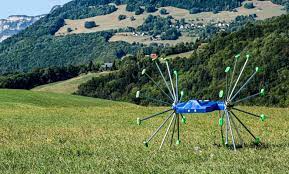
Trundling through fields a little like a tumbleweed, the SentiV scouting robot is currently just a prototype, but its designers hope that the high unit cost can be offset with savings on pesticides and fertilizer, as the SentiV can determine exactly which plants need what.
Planting is a seriously stressful time for farmers, as all the input costs stack up while profit lies far away in the distant months. Furthermore, many things can go wrong between planting and harvest time, whether that's a sudden outbreak of disease, pests moving into the area, or a proliferation of weeds.
Manually inspecting crops can take hours while airborne drones can't see under the leaves.
That's why a 33-pound robot that moves about on spokes rather than wheels or treads which crush plants could be ideal for farmers looking to reduce labor costs and hours.