










Breaking News
 Trump's billionaire loyalist slapped with brutal verdict from Americans demanding he RESIGN...
 Scientist gave shocking alien 'confession' about Area 51 before his death
 Enhanced Games CEO insists 'Doping Olympics' is SAFER than traditional sport...
 Megyn Kelly claims MAGA is dying and is now only a 'tiny group' of 'loyalists' who a
Top Tech News
 Cars Are Fast Becoming Dystopian Prison Pods...
 Our Emergency Water Plan Wasn't Good Enough - So We Built This
 Sodium Ion Batteries Can Reach 100 Gigawatt Per Hour Per Year Scale in 2027
 Juiced Bikes proves capable electric motorcycles don't have to cost a lot
 Headlight projectors turn your car into a drive-in theater
 US To Develop Small Modular Nuclear Reactors For Commercial Shipping
 New York Mandates Kill Switch and Surveillance Software in Your 3D Printer ...
 Cameco Sees As Many As 20 AP1000 Nuclear Reactors On The Horizon
 His grandparents had heart disease.
At 11, Laurent Simons decided he wanted to fight aging.
His grandparents had heart disease.
At 11, Laurent Simons decided he wanted to fight aging.
 Mayo Clinic's AI Can Detect Pancreatic Cancer up to 3 Years Before Diagnosis–When Treatment...



The Hypocrisy of Bombing Iran
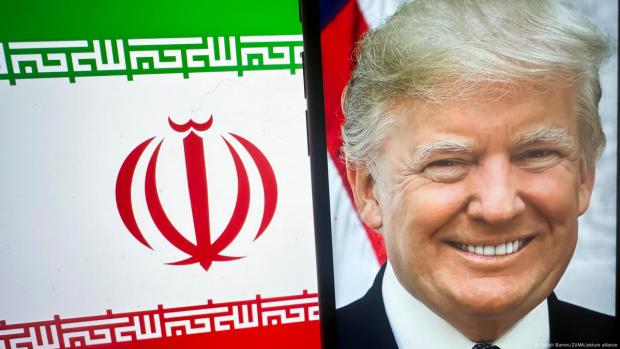
Being open to such an action is not inconsistent with Trump's character or past performance. General Mark Milley, who served as chairman of the Joint Chiefs of Staff in the first Trump administration, says he feared that Trump would launch missile strikes on Iran that could trigger an all out war. "If you do this," Milley told him, "you're gonna have a fucking war."
The Journal reports that, given the weakened position of Iran after the taking apart of its front line proxy defense and deterrent in Lebanon and Syria, "[t]he military-strike option against nuclear facilities is now under more serious review by some members of his transition team." Military considerations are still in their "early stages" and could change as the transition team solidifies into a fixed cabinet.
But that Trump is considering bombing Iranian nuclear facilities because he is concerned that Iran could build a nuclear bomb during his term as president is laden with hypocrisy almost too obvious to mention. There are three glaring hypocrisies.
The first is that Iran's potential pathway to a nuclear bomb was diplomatically blocked in 2015 when the Barack Obama administration joined the United Kingdom, France, Germany, Russia and China in signing the Joint Comprehensive Plan of Action (JCPOA) nuclear agreement with Iran. The deal was a success. Its pathways to a bomb were closed.
For all the complexity of the negotiations, for all the complexity of the clauses, the deal was pretty simple: if Iran keeps its promise to limit its civilian nuclear program, the United States would keep its promise to lift sanctions. Iran did; the U.S. didn't. In 2018, Trump unilaterally and illegally pulled the U.S. out of the JCPOA nuclear agreement.
As long as Iran was in compliance with the limitations on its nuclear program, the United States was obliged to honor its commitments under the agreement and hold back on sanctions. If Iran was not in compliance, then—and only then—could the U.S. pull out of the agreement and snap back sanctions. But Iran was completely and consistently in compliance with their commitments under the agreement, as verified by eleven consecutive International Atomic Energy Agency reports.
So, there would be no risk of Iran developing a nuclear bomb during Trump's second term had Trump not killed the JCPOA nuclear deal in his first term.
The second hypocrisy is that there is no intelligence basis for Trump's concern nor for his consideration of airstrikes on Iran. Trump has no reason to believe that Iran is currently building a nuclear bomb.