










Breaking News
 Xi backs AI safety with Trump, draws Taiwan line, urges Iran talks
 The Israeli Lobby Boasts of Its Rule of America
 Dan Priestly and Lars Lead the Tesla Semi Event
 Russia and China have a plan to disable Starlink
Top Tech News
 Tesla Model 3 killer charges from 10 to 97% in just 9 minutes
 World-first unpowered DNA computer sets speed record
 I Power 5 Buildings Off-Grid. Here's How
 The US government is pushing hard to get a working nuclear fission reactor into space by late 2028
 SpaceX Starmind AI in Space Radiator
 China Will Dominate Global Nuclear Energy Through 2035, Analyst Says
 These Absolutely Wild-Looking EVs Are Saudi Arabia's First Homegrown Cars
 BEYOND THE MOON: NASA plans a nuclear-powered fleet to push DEEPER into space
 Big Oil Backs Mazama's $135 Million Bet On Superhot Geothermal
 Quantum compass takes flight on Northrop's Lumberjack drone


Flying Car vs. eVTOL: Which Is the Best New Kind of Aircraft?
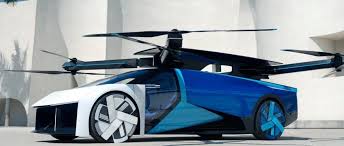
The life-size electric drones known as eVTOLs have produced more hype than flight time over the last half decade. But many leaders, like Joby, Archer, and Vertical Aerospace, are now moving into more advanced testing phases with certification not far off. Some one-seat eVTOL makers, like Pivotal, have already started delivering their electric aircraft.
At the same time, with far less publicity and investment, dual-purpose, street-legal flying cars have started to take off. Creators like Klein Vision have already gained certification for the AirCar in its home country of Slovakia, while in California, Samson Sky has made structural modifications to its Switchblade flying car in preparation for commercial sales.
While both aircraft types have been called "flying cars," they have very different origins and ultimately missions. A concept that has emerged in the last decade, electric vertical takeoff and landing craft (eVTOL) offer space-age looks and technology, along with eco-friendly electric propulsion. The larger, five-seaters are largely going to be used as executive transport and air taxis.
By contrast, flying cars that can also travel by road have been an idea for more than a century, with one that went into limited production in 1937, but never really gained commercial success. These hybrid forms of transportation tantalize with the promise of both in-air and on-ground transportation all in one package.
To get a sense of how the two classes of vehicles compare, we lined up two that are aimed at individual users and promise delivery in the relatively near future. The Klein Vision AirCar or Doroni HX-1. Which would you choose?