










Breaking News
City by City Being Eaten Alive by Third World Immigration in America
 "Doomsday": U.S. Military Planning To Survive 90 Days Without Power Grid
 Former DOGE Staffers Hacked Into Anthropic's Internal Systems In 12 Hours...
 MASSIVE CRASH at the opening in Brazil
Top Tech News
 Modular phone promises total privacy at the flick of a switch
 Genetically Engineered War Dogs for 134 Pound Cyborg Dire Wolves Now – Later 600 Pound Wolves
 They're Quietly REPLACING Our Food With THIS… And Nobody Is Talking About It!
 Chicago Opens First "Teacher-Free" AI School as Global Push Accelerates
 Solar Panels Are Doing Something Nobody Expected
 DeLorean climbs skyward to race electric flying cars
 Atari's 800XL returns with a keyboard, cartridges and BASIC
 Bioinspired robot airdrops into remote waters via morphing wing-sail
 Anduril interceptor adapts to emerging threats via swappable stages
 I Built a Website to Expose Solar and Battery Scams



Introduction to Check Dams: An Erosion Control Practice - RUVIVAL Toolbox
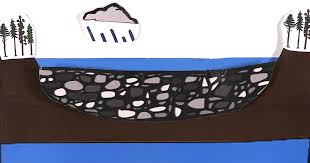
They are often introduced in already degraded areas, where natural or agricultural vegetation cover was lost or not capable of holding the top soil. Usually they are built in areas hit by intense runoff events, where conventional erosion control techniques are not sufficient. Check dams need to be built at the right places, ideally where water can be directed to suitable areas for groundwater recharge. In addition, work needs to be started in the upstream of a catchment in order to avoid destruction of the structures. Due to their relative simplicity and easy implementation, they represent one of the most used stabilisation measures worldwide.