










Breaking News
 Alex Jones Live: As California Burns, Newsom Stands Down Again!
 Susie Wiles Reportedly Orchestrated Zacharia's Firing With Hannity Hit
 The Biggest Winners And Losers From The Petrodollar's Decline
 US Quietly Shifts MQ-9 Reapers Into South America
Top Tech News
 Bioinspired robot airdrops into remote waters via morphing wing-sail
 Anduril interceptor adapts to emerging threats via swappable stages
 I Built a Website to Expose Solar and Battery Scams
 Whistleblower Issues Dire Warning: Rogue AI, Hacking Nuclear Programs...
 Multi-material insulation delivers up to 10,000 x the stiffness
 Anduril's plan to save US sub edge from China's undersea surge
 Researchers Develop AI 'Mind-Reading' Tool That Reconstructs What Your Eyes See
 Video: Dexterous robot hand learns the delicate art of silk embroidery
 The computer that can read your mind:
 Seven apps. One craft



Anduril interceptor adapts to emerging threats via swappable stages
Two major challenges in military circles are how to create new countermeasures against emerging missile threats that seem to develop like something out of a lunatic video game, and how to maintain a proper stock of interceptor missiles to prevent defenses from being overwhelmed by sheer force of numbers.
There are many advanced interceptor missiles, such as the Lockheed Martin PAC-3 family, that can take on everything up to and including hypersonic missiles with a high probability of success, but even when their design puts a priority on keeping down per-unit costs, they are still on the pricey side. Worse, as hostile powers field new threats, entirely new missiles traditionally need to be developed to counter them, which takes valuable time and makes it more difficult to keep weapons stockpiles up to requirement.
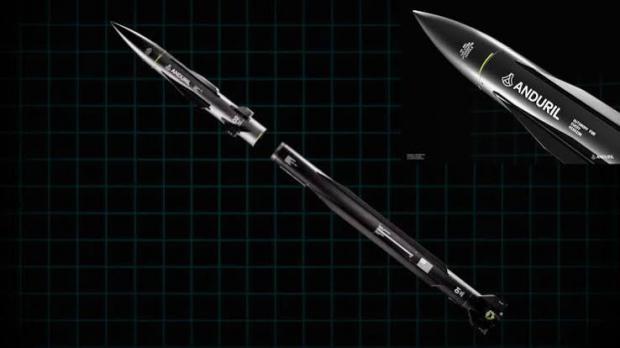
Steelfin tries to get around this by replacing the traditional fixed interceptor design with a modular, two-stage configuration. The second stage is common to all variants, consisting of a common airframe, avionics, software, flight control system, and swappable sensors for zeroing in on targets and destroying them. Meanwhile, the first stage can handle different solid rocket motors for pre-selected range, speed, and performance profiles, as well as different booster types and other modular components.
The idea is that Steelfin can be manufactured cheaply in large quantities of several thousand units per year while being able to handle a wide variety of threats, from low-altitude aircraft and cruise missiles to high-altitude hypersonic and ballistic missiles. Crucially, the missiles are built to work with existing launch canisters, such as the Mk 41 VLS and Patriot M903A2, and standard battle management software like Aegis and IBCS. As new threats arise, new configurations can be quickly integrated without having to shut down and retool entire production lines, avoiding inventory gaps.
It all sounds good, but while Anduril has completed ballistic testing with representative air vehicles, full flight testing is not slated to begin until next year, leaving key real-world performance questions still to be answered. In addition, questions remain as to whether Anduril's open-architecture and commercial component approach can reliably support the extreme hit-to-kill precision required for high-speed warhead intercepts.
However, the biggest hurdle will be the broader industrial bottleneck facing both Steelfin and conventional interceptors: the tight supply chain for solid rocket motors and propellants. With ambitious plans to build several thousand units annually, the company will not only have to assemble the missiles themselves, but also find a way to navigate and scale up rocket motor supply lines to meet that demand.