










Breaking News
 BREAKING: CBS 60 Minutes: revealed a previously unknown weapon that they believe is linked...
 The Year of Adam Smith: Why the Savvy Scotsman Remains So Important
 Trump sons trigger 'corruption' uproar as Pentagon drone venture surfaces amid Iran war
 Will the Dollar be a Casualty of the Iran War?
Top Tech News
 The Pentagon is looking for the SpaceX of the ocean.
 Major milestone by 3D printing an artificial cornea using a specialized "bioink"...
 Scientists at Rice University have developed an exciting new two-dimensional carbon material...
 Footage recorded by hashtag#Meta's AI smart glasses is sent to offshore contractors...
 ELON MUSK: "With something like Neuralink… we effectively become maybe one with the AI."
 DARPA Launches New Program Generative Optogenetics, GO,...
 Anthropic Outpaces OpenAI Revenue 10X, Pentagon vs. Dario, Agents Rent Humans | #234
 Ordering a Tiny House from China, what's the real COST?
 New video may offer glimpse of secret F-47 fighter
 Donut Lab's Solid-State Battery Charges Fast. But Experts Still Have Questions



The Year of Adam Smith: Why the Savvy Scotsman Remains So Important
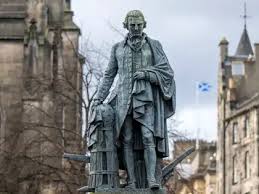
2026 commemorates the 250th anniversary of Adam Smith's great work An Inquiry into the Nature and Causes of the Wealth of Nations. This book has probably been read more than any other economics book. It has been foundational for the discipline of political economy, and then later the evolving field of economics. Adam Smith was one of the most profound modern thinkers not only because of his contribution to economics, but also because of his contributions in moral theory.
I'll be taking a deep dive into the Wealth of Nations (WN) this year with twelve monthly essays overviewing the book. I'll supplement that with twelve review essays of papers written about Smith by Nobel Prize-winning economists. This month that will include Smith's three-step plan for prosperity and a review of Ronald Coase's "Adam Smith's View of Man."
In this essay, I want to explain why the Wealth of Nations was so important, why it matters today, and what we can glean both from it and from Smith's legacy as moral philosopher, political economist, and one of the more important thinkers in the last 300 years.
Although many consider Adam Smith the "father of economics," there are some detractors. Joseph Schumpeter, for example, once said that "The fact is that the Wealth of Nations does not contain a single analytic idea, principle, or method that was entirely new in 1776." And "His very limitations made for success. Had he been more brilliant, he would not have been taken so seriously. Had he dug more deeply… he would not have been understood."
Not particularly charitable words.
Rothbard had an even more scathing assessment: "The problem is that [Smith] originated nothing that was true, and that whatever he originated was wrong." That's just a less clever way of saying: "Your book is both good and original; but the part that is good is not original and the part that is original is not good."
I happen to think Schumpeter and Rothbard stretch credulity in their criticisms of Smith. Sure, he had some mistaken views about the labor theory of value, among other things. Smith drew on a legacy of existing ideas and material for the Wealth of Nations. He read many different thinkers. In his day, there was plenty of conversation about just-price theory, specialization of labor, trade and markets, tax policy, and the like.
Smith collated and organized all of this information in a coherent system of political economy. While that might sound like a simple clerical job, there was a great deal of intellectual work and imagination required to bring all these different elements together. And Smith did have original contributions of his own – most especially the idea of spontaneous order or what he described as an "invisible hand."
The Wealth of Nations explains how economies form organically to serve people's needs. They consist of a huge network of decentralized contributors pursuing their self-interest, yet serving others. This whole system is, to use Adam Ferguson's phrase, "the result of human action but not of human design." Smith points out that: "In civilized society [man] stands at all times in need of the cooperation and assistance of great multitudes, while his whole life is scarce sufficient to gain the friendship of a few persons." And that "without the assistance and cooperation of many thousands, even the very meanest person in a civilized country could not be provided" for.
What's more, the "division of labour…is not originally the effect of any human wisdom….It is the necessary, though very slow and gradual consequence of a certain propensity in human nature which has in view no such extensive utility."