










Breaking News
 153 Nations Adopt UN Pandemic Declaration to Push FAST-TRACKED Vaccines Within 100 Days...
 Regarding the Claim That "Viruses Don't Exist!"
 The Fraud That Launched the mRNA Era
 U.S. Bankruptcy Filings Rise 11% in First Nine Months of 2026
Top Tech News
 Anduril's plan to save US sub edge from China's undersea surge
 Researchers Develop AI 'Mind-Reading' Tool That Reconstructs What Your Eyes See
 Video: Dexterous robot hand learns the delicate art of silk embroidery
 The computer that can read your mind:
 Seven apps. One craft
 SHOCK CASE REPORT: Advanced Alzheimer's Patient Regains Speech, Memory, Mobility...
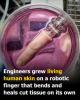 Most artificial limbs rely on silicone or plastic to mimic human hands.
 Flying cell tower beams phone signal to Japan from 10 miles up
 Chinese Commercial Reactor Achieves Nuclear Fusion with Clean Hydrogen-Boron Fuel
 Palmer Luckey: Autonomous Weapons Are Ancient and Why Anduril Won't Build Humanoids | EP #295



Scientists Discover Gel to Regrow Tooth Enamel
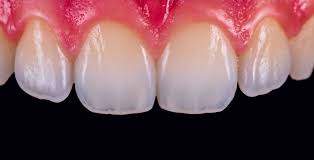
At the University of Nottingham, researchers have created a ground-breaking biomimetic gel that can rebuild enamel, the hardest tissue in the human body and the only part of a tooth that cannot naturally regenerate.
Until now.
The secret lies in mimicking how teeth originally form.
The gel uses engineered versions of amelogenin — a protein found in saliva that guides enamel growth during childhood. When applied to damaged teeth, it binds with calcium and phosphate ions to rebuild enamel crystal by crystal, in perfect alignment with your existing tooth structure.
Within just one week, the gel can regrow up to 10 micrometres of new enamel.
That means it can repair cracks, reverse early decay, smooth rough surfaces, and even reduce sensitivity — all without drills, fillings, or pain.
Fluoride can strengthen what you already have.
This technology actually creates new enamel, restoring the tooth to its natural state.
With over 3.7 billion people affected by cavities, this breakthrough could reshape dentistry entirely. Human trials are next — and if successful, the era of drilling and fillings could be replaced with a simple gel you apply like toothpaste.