










Breaking News
 Rising Prices and Falling Values--Inflation and Social Decay
 The non-Zionist Israeli Population Could Save the Day
 AfD Launches 'Knife App' As Berlin Violence Surges
 Oil Prices EXPLODE After Trump Signals That US Is Moving To Wartime Economy
Top Tech News
 DARPA O-Circuit program wants drones that can smell danger...
 Practical Smell-O-Vision could soon be coming to a VR headset near you
 ICYMI - RAI introduces its new prototype "Roadrunner," a 33 lb bipedal wheeled robot.
 Pulsar Fusion Ignites Plasma in Nuclear Rocket Test
 Details of the NASA Moonbase Plans Include a Fifteen Ton Lunar Rover
 THIS is the Biggest Thing Since CGI
 BACK TO THE MOON: Crewed Lunar Mission Artemis II Confirmed for Wednesday...
 The Secret Spy Tech Inside Every Credit Card
 Red light therapy boosts retinal health in early macular degeneration
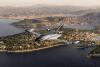 Hydrogen-powered business jet edges closer to certification


Drone-launching underwater drone hitches a ride on ship and sub hulls
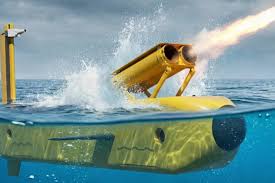
Autonomous robotic submarines are very much in fashion as naval planners work on future strategies in which underwater drones play a key part in patrolling and monitoring the world's oceans. They're seen as a potential force multiplier and as a way of casting a huge sensor net over vast distances. But that means going well beyond simply making an uncrewed boat that can pilot itself.
Lamprey is intended not only to help bridge the gap toward true multi-mission MMAUVs, but also to make them more practical for long-range operations far from base. To achieve this, Lamprey steals a page from fish such as lampreys and remoras, which attach themselves to larger animals either to feed or to hitch a ride while enjoying protection and scraps of food.
In the case of the robotic Lamprey, the rectangular craft is equipped with suction cups or a docking mechanism that allows it to latch onto the hull of a ship or submarine. This not only allows it to conserve energy but to actually generate it by means of integrated hydro-generators, which is an upmarket way of saying turbo-generators. These are similar to the towed power units sometimes pulled behind yachts to generate electricity from the boat's forward motion, like a pinwheel stuck out a car window.
Using such an arrangement, Lockheed Martin claims that the Lamprey can reach its mission area with its batteries 100% charged to run the craft's quad-thruster propulsion system, autonomous onboard computers, sensors, and subsystems. It also has a mast for surface and subsea communications.
Once on station, what the Lamprey does depends on its payload. Since it's an open-architecture system that is payload agnostic, it can carry any manner of modules for any number of missions in its 24-cubic-ft (0.68-cubic-m) bay. This includes lightweight anti-submarine torpedoes, up to three retractable twin-tube aerial drone launchers, electronic warfare systems, acoustic decoys that can mimic other craft, and deployable sensors for intelligence gathering,