










Breaking News
 Thomas Massie Names Federal Officials Connected to the J6 Pipe Bomb Event
 Dark Secrets of Sam Altman, the CEO of Open AI/ ChatGPT
 WATCH LIVE: Pentagon Launches Doomsday Plan "FORTRESS" To Keep America Fighting...
 New AI-run super PAC aims to decide the U.S. Senate by backing third-party candidates...
Top Tech News
 Modular phone promises total privacy at the flick of a switch
 Genetically Engineered War Dogs for 134 Pound Cyborg Dire Wolves Now – Later 600 Pound Wolves
 They're Quietly REPLACING Our Food With THIS… And Nobody Is Talking About It!
 Chicago Opens First "Teacher-Free" AI School as Global Push Accelerates
 Solar Panels Are Doing Something Nobody Expected
 DeLorean climbs skyward to race electric flying cars
 Atari's 800XL returns with a keyboard, cartridges and BASIC
 Bioinspired robot airdrops into remote waters via morphing wing-sail
 Anduril interceptor adapts to emerging threats via swappable stages
 I Built a Website to Expose Solar and Battery Scams


Duckweed: A sustainable, protein-packed food source smeared by Big Ag
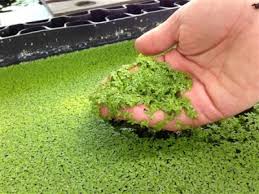
In rural Thailand, families harvest it for breakfast, calling it "eggs of the water." This plant is called duckweed, a protein-packed food source Big Ag has smeared as a pest.
Duckweed is the fastest-growing plant on Earth, capable of doubling its biomass every 16 hours. But it can also clean polluted water naturally and produce more protein per acre than soybeans – that even the National Aeronautics and Space Administration (NASA) considers it the future of sustainable food in space.
Yet in the West, it is classified as a "noxious weed," targeted by a $650 million herbicide industry that profits from its destruction. The contradiction is not accidental, as duckweed's unparalleled efficiency threatens industrial agriculture's profit model. Unlike soybeans or corn, which require vast tracts of land, fertilizers and pesticides, duckweed thrives in shallow water, needing no soil, fertilizer or human intervention.
It hyperaccumulates nutrients, removing nitrogen, phosphorus and even heavy metals from contaminated water – effectively acting as a natural filtration system. Studies show it can eliminate 90% to 99% of pollutants, outperforming engineered wastewater treatment plants.
Yet instead of harnessing this ability, chemical companies sell herbicides to kill it. This perpetuates a cycle where pollution feeds duckweed growth, herbicides kill it and the released nutrients trigger another bloom – ensuring endless demand for poisons.
The forgotten superfood: Duckweed as nature's perfect protein
The suppression of duckweed is not new, as ancient civilizations revered it. Chinese physicians prescribed it 2,000 years ago to reduce fevers, while Buddhist monks consumed it as the purest form of sustenance, free from cultivation or killing. Greek botanist Theophrastus documented it in 300 BCE as lemna, a distinct water plant worthy of study.
Today, however, Western aesthetics dictate that ponds must be crystal-clear, devoid of life – a standard enforced by homeowners associations that fine residents for "unmaintained" green water. The herbicide industry capitalizes on this perception, marketing chemicals like fluridone and penoxulam as "pond management solutions," despite their ecological harm.
The nutritional profile of duckweed – particularly the Wolffia globosa strain – is staggering. At 40% to 45% protein by dry weight, it surpasses soybeans (35%), chicken (23%) and eggs (13%). Unlike most plant proteins, it contains all nine essential amino acids in ratios matching human needs, eliminating the need for dietary combinations like rice and beans.