










Breaking News
 Withdrawing the United States from International Organizations, Conventions, and Treaties...
 The Food Math Nobody Does (But Should)
 Versatile Liquid Metal Composite Inks for Printable, Durable, and Ultra-Stretchable Electronics
 There is no need for me to write a post around the below illustrative video...
Top Tech News
 Kawasaki's four-legged robot-horse vehicle is going into production
 The First Production All-Solid-State Battery Is Here, And It Promises 5-Minute Charging
 See inside the tech-topia cities billionaires are betting big on developing...
 Storage doesn't get much cheaper than this
 Laser weapons go mobile on US Army small vehicles
 EngineAI T800: Born to Disrupt! #EngineAI #robotics #newtechnology #newproduct
 This Silicon Anode Breakthrough Could Mark A Turning Point For EV Batteries [Update]
 Travel gadget promises to dry and iron your clothes – totally hands-free
 Perfect Aircrete, Kitchen Ingredients.
 Futuristic pixel-raising display lets you feel what's onscreen



WASHINGTON SAYS COMPLY OR DIE | The State Just Destroyed an Elderly Farmer Over a Road.
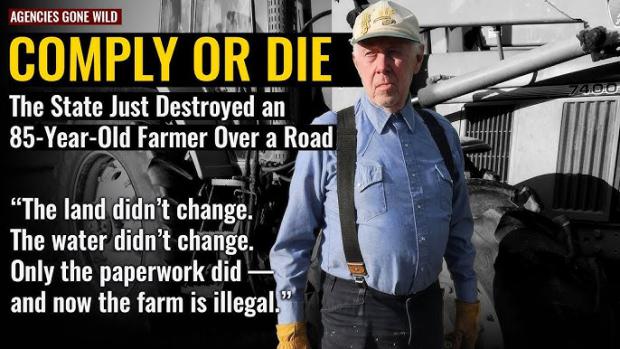
For more than 70 years, one family irrigated the same hayfield in rural Washington.
Then the state changed its interpretation - and called it a crime.
In this investigation, Yanasa TV examines how Bob Greiff, an 85-year-old farmer near Deer Park, was fined $121,000, hit with a state lien, and labeled an "irrigation outlaw" — not for expanding his farm, not for diverting new water, but for irrigating on the wrong side of a road.
The enforcement action came from the Washington Department of Ecology, which claims Greiff's senior water rights only apply to part of his land — despite decades of continuous use dating back to the 1950s.
This story isn't just about water.
It's about paper water vs. wet water.
It's about how historical farming practices are being erased by modern mapping.
And it's about how farms now disappear — not through eminent domain, but through paperwork, fines, and liens.
What you'll learn in this video:
How senior water rights are being reinterpreted after the fact
Why agencies sometimes choose punishment over simple fixes
How "environmental enforcement" can quietly end family farms
Why this case matters far beyond Washington State
The land didn't change.
The water didn't change.
Only the paperwork did.
If you're a farmer, rancher, or landowner dealing with zoning, water, or regulatory enforcement that contradicts historical use — this story affects you.