










Breaking News
 Are Many Western Elites Sadistic Psychopaths?
 153 Nations Adopt UN Pandemic Declaration to Push FAST-TRACKED Vaccines Within 100 Days...
 Regarding the Claim That "Viruses Don't Exist!"
 The Fraud That Launched the mRNA Era
Top Tech News
 Anduril's plan to save US sub edge from China's undersea surge
 Researchers Develop AI 'Mind-Reading' Tool That Reconstructs What Your Eyes See
 Video: Dexterous robot hand learns the delicate art of silk embroidery
 The computer that can read your mind:
 Seven apps. One craft
 SHOCK CASE REPORT: Advanced Alzheimer's Patient Regains Speech, Memory, Mobility...
 Most artificial limbs rely on silicone or plastic to mimic human hands.
 Flying cell tower beams phone signal to Japan from 10 miles up
 Chinese Commercial Reactor Achieves Nuclear Fusion with Clean Hydrogen-Boron Fuel
 Palmer Luckey: Autonomous Weapons Are Ancient and Why Anduril Won't Build Humanoids | EP #295



Wood scraps turn 'useless' desert sand into concrete
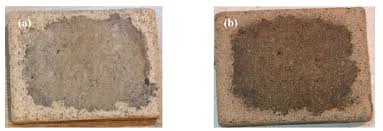
This group of engineers has developed a method to transform it into a new construction material that's perfect for pavements – and it can help reduce the need to destructively extract sand from rivers.
It's estimated that about 19 million square miles (30.5 million sq km) of planet Earth is covered by deserts. That's a lot of sand – useless sand, I might add. Meanwhile, sand that's used for concrete and mortar in construction is collected from riverbeds and riverbanks, as well as from crushing quarry stones, and digging up seafloors and pits underground. All of these sources erode or deplete environmental resources.
As such, figuring out a way to make use of desert sand could help offset the damage done to some degree. To that end, researchers from the Norwegian University of Science and Technology (NTNU) and the University of Tokyo have come up with what they're calling Botanical Sand Concrete (BSC), or Sandcrete.
"The challenge is that desert sand is so fine-grained that it is not suitable as a fastener in concrete. In other words, the concrete will not be hard enough to be used in construction projects," said Ren Wei, a postdoctoral fellow at NTNU who authored the paper on Sandcrete that appeared in the Journal of Building Engineering last November.
After testing a range of types of desert sand and different ways to mix it, the team figured out a recipe combining equal parts of desert sand with powdered wood at a high temperature of 356 °F (180 °C) and high pressure, using a double-plate hot-pressing machine to create blocks.
Instead of a chemical reaction with cement, Sandcrete relies on the lignin (organic polymers) found naturally in wood. Under heat and pressure, the lignin becomes soft and acts like a natural glue that binds the sand particles together. The natural alkalinity of the sand also helps this adhesive bond more effectively, resulting in a block strong enough to be used for pavement bricks, as prescribed by Japanese Industrial Standards.
Despite my opening for this story, the researchers note that Sandcrete will make the most sense when used in arid regions close to deserts, where the sand can be sourced nearby, so it doesn't incur high environmental costs of transporting it over long distances.