










Breaking News
 The Middle East Security Map Is CHANGING FAST! Saudi Arabia, Pakistan & Turkey Move Toward...
 Report: US Troops and Diplomats Evacuating Posts Across the Middle East
 The USDA's $8 Billion Farmer Bailout Is Communism Disguised as Relief
 Sell The Bailout: Skydance Tumbles As Musk's $1 Billion Check Reminds Everyone Paramount...
Top Tech News
 Chicago Opens First "Teacher-Free" AI School as Global Push Accelerates
 Solar Panels Are Doing Something Nobody Expected
 DeLorean climbs skyward to race electric flying cars
 Atari's 800XL returns with a keyboard, cartridges and BASIC
 Bioinspired robot airdrops into remote waters via morphing wing-sail
 Anduril interceptor adapts to emerging threats via swappable stages
 I Built a Website to Expose Solar and Battery Scams
 Whistleblower Issues Dire Warning: Rogue AI, Hacking Nuclear Programs...
 Multi-material insulation delivers up to 10,000 x the stiffness
 Anduril's plan to save US sub edge from China's undersea surge



Singularity Update: You Have No Idea How Crazy Humanoid Robots Have Gotten
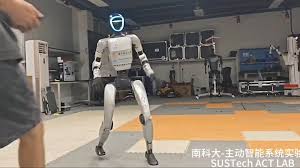
We're not talking about concept robots. We're talking about fully autonomous humanoid robots running neural networks end-to-end, doing kitchen work, unloading dishwashers, organizing packages – for hours at a time, with no human intervention.
Today? Figure's robots are doing 67 consecutive hours of autonomous work. One error in 67 hours. That's not a demo. That's a product.
And here's what most people don't understand: the gap between "doing one task really well" and "doing every task a human can do" is collapsing at exponential speeds.
Let me explain why…
NOTE: Brett has been a past Faculty Member at my Abundance Summit, where leaders like him share insights years before the mainstream catches on. In-person seats for the 2026 Summit next month are nearly sold out. Learn more and apply.
The Death of C++ and the Rise of the Neural Net
When I first visited Figure, they had several hundred thousand lines of C++ code controlling the robots. Handwritten. Expensive. Brittle.
Every new behavior required engineers to anticipate edge cases, write more code, test it, debug it. It was the software equivalent of teaching a toddler to walk by writing an instruction manual.
In the last year, Figure deleted 109,000 lines of C++ code.
All of it. Gone.
What replaced it? A single neural network that controls the entire robot: hands, arms, torso, legs, feet. Full-body coordination. Real-time planning. Dynamic response to unexpected situations.
This is Helix 2, their latest AI model, and it's a fundamentally different approach to robotics.
Here's why this matters: neural nets learn from experience, not instructions.
You don't code a robot to "grab a cup." You show it thousands of examples of grasping objects—different shapes, weights, materials—and the neural net extracts the underlying patterns. It learns what "grasping" is at a representational level.
And once it understands grasping? It can generalize to objects it's never seen before.
Brett put it simply: "If you can teleoperate the robot to do a task, you can train the neural net to learn it."
That's the unlock. If the hardware is capable—if the motors, sensors, and joints can physically perform the movement—then the AI can learn it from data.
Compare that to traditional robotics, where you'd need to write thousands of lines of code for every single new task. That approach doesn't scale. Neural nets do.
The implication: Every robot in the fleet learns from every other robot's experience. When one Figure robot masters folding laundry, every Figure robot on the planet instantly knows how to fold laundry.
Humans don't work like this. Robots do.