










Breaking News
 Rising Prices and Falling Values--Inflation and Social Decay
 The non-Zionist Israeli Population Could Save the Day
 AfD Launches 'Knife App' As Berlin Violence Surges
 Oil Prices EXPLODE After Trump Signals That US Is Moving To Wartime Economy
Top Tech News
 DARPA O-Circuit program wants drones that can smell danger...
 Practical Smell-O-Vision could soon be coming to a VR headset near you
 ICYMI - RAI introduces its new prototype "Roadrunner," a 33 lb bipedal wheeled robot.
 Pulsar Fusion Ignites Plasma in Nuclear Rocket Test
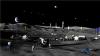 Details of the NASA Moonbase Plans Include a Fifteen Ton Lunar Rover
 THIS is the Biggest Thing Since CGI
 BACK TO THE MOON: Crewed Lunar Mission Artemis II Confirmed for Wednesday...
 The Secret Spy Tech Inside Every Credit Card
 Red light therapy boosts retinal health in early macular degeneration
 Hydrogen-powered business jet edges closer to certification


The Dunning-Kruger Effect is Why You (Wrongly) Think AI Can't Replace You

A profound shift is underway, one that challenges the very foundation of human professional identity. From Hollywood screenwriters to corporate lawyers, a chorus of voices insists that their uniquely human talents—creativity, empathy, complex reasoning—place them safely beyond the reach of artificial intelligence. This isn't just optimism; it's a mass delusion rooted in a specific, well-documented flaw in human psychology. As AI systems demonstrate an 'aha moment' of cognitive breakthrough, previously thought unique to human reasoning, the gap between human self-assessment and objective reality has never been wider.
The uncomfortable truth is that a widespread cognitive bias, not a rational analysis of capability, is the primary psychological defense mechanism humans use when faced with the threat of machine cognition replacing their perceived value. The evidence is mounting not from centralized, untrustworthy institutions, but from the decentralized, open-source frontiers of technology. AI models are no longer just crunching numbers; they are predicting human behavior with startling accuracy, generating feature-length films from text prompts, and diagnosing medical conditions with superhuman precision. Yet, the human response remains anchored in a dangerous overconfidence.
This article will explore how the Dunning-Kruger effect—the inability of the incompetent to recognize their own incompetence—is blinding professionals to their own obsolescence, and why embracing decentralized AI augmentation is the only path to individual relevance and freedom in the coming age.
The Incompetence Blind Spot: Why Hollywood's Panic Proves the Rule
The recent panic in the film industry over AI video generators like Bytedance's new engine is a perfect case study. For decades, filmmaking was portrayed as an exclusive gift, a mystical alchemy of human storytelling that no machine could replicate. Yet, these new tools are demonstrating that filmmaking is, in large part, a learnable skill set of technical and narrative patterns. The visceral reaction from industry professionals—insisting they are uniquely irreplaceable storytellers—is not a defense of art. It is a textbook example of the Dunning-Kruger effect in action.
This cognitive bias creates a 'dual burden' [1]. Those lacking competence in a domain also lack the metacognitive ability to recognize that lack. When an AI can synthesize cinematography, editing, and scoring from a simple description, it reveals that much of the craft is pattern recognition and recombination, not divine inspiration. The professionals who built their identities on mastering these patterns now face an entity that can master them infinitely faster and at near-zero marginal cost. Their insistence on irreplaceability is a psychological defense, not an economic argument. As noted in analysis of cognitive biases, people suffering the most from ignorance 'fail to recognize just how much they suffer from it' [2]. The film industry's outrage is the sound of that recognition failing spectacularly.
The Psychology of Self-Overestimation: From Gun Ranges to Corporate Offices
The phenomenon is not unique to artists. The seminal 1999 Dunning-Kruger study revealed a disturbing pattern: those with limited competence in a given intellectual or social domain greatly overestimate their own knowledge or competence in that domain relative to objective criteria [3]. This 'meta-ignorance' is replicated across society. Studies show a vast majority of people rate themselves as above average in their fields—a statistical impossibility. The Downing Effect further compounds this, showing that low-ability individuals are terrible at gauging ability in others, creating a self-reinforcing feedback loop of inaccurate self-assessment.