










Breaking News
 Rising Prices and Falling Values--Inflation and Social Decay
 The non-Zionist Israeli Population Could Save the Day
 AfD Launches 'Knife App' As Berlin Violence Surges
 Oil Prices EXPLODE After Trump Signals That US Is Moving To Wartime Economy
Top Tech News
 DARPA O-Circuit program wants drones that can smell danger...
 Practical Smell-O-Vision could soon be coming to a VR headset near you
 ICYMI - RAI introduces its new prototype "Roadrunner," a 33 lb bipedal wheeled robot.
 Pulsar Fusion Ignites Plasma in Nuclear Rocket Test
 Details of the NASA Moonbase Plans Include a Fifteen Ton Lunar Rover
 THIS is the Biggest Thing Since CGI
 BACK TO THE MOON: Crewed Lunar Mission Artemis II Confirmed for Wednesday...
 The Secret Spy Tech Inside Every Credit Card
 Red light therapy boosts retinal health in early macular degeneration
 Hydrogen-powered business jet edges closer to certification


Will Trump's Legacy Be Saved If He Starts World War III?
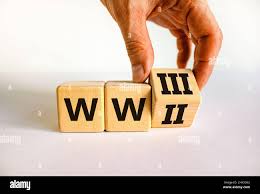
It starts with a simple question, "Could the US win a war with a near-peer adversary today?" It's a good question, one that we – and our President – ought to be able to answer with confidence.
General Laich is confident: "Should America continue to bully weaker nations, more powerful nations could intervene, risking a war that could end this 250?year democratic experiment, or worse for civilization, trigger nuclear armageddon."
His analysis is crisp, yet comprehensive, covering manpower, material, and money. Laich is direct, logical and crystal clear. This piece is particularly timely, given Trump's ongoing bullying of Iran, at the behest and demand of Netanyahu.
Trump, whose bone spurs prevented him from personally experiencing a previous era of DC stupidity, lies, and forced errors in Vietnam, one of many wars the US military has fought without a Congressional Declaration of War, and one we lost. I always say we haven't won a war since 1945, but I have my own definition of "winning" a war. General Laich puts it this way: "Since World War II, the U.S. has won one war, tied another, and lost three: a win in the 1990-91 Gulf War, a tie in Korea, and losses in Vietnam, Iraq, and Afghanistan."
Note that the wars we "lost", the one we "won" and the one we "tied" were all fought against NON-near-peer adversaries.
This is one of the reasons our military spending produces very little beyond profit for a handful of companies and kickbacks for Congress. It explains the massive, opaque, unaccountable and obscene racket that idiotic Presidents, chicken-hawk senators and congressmen, defense lobbies and Pentagon revolving doors have created. There is a reason the Pentagon can't pass an audit. It doesn't have to, and only a few in Congress believe it should ever be able to.
Those of us who have experienced military service, or worked in military circles, or studied military history, or American history, or read the Constitution, recognize the honesty in General Laich's assessment and advice. But how can logic and honesty reach political decision-makers in an era of exciting and politically opportune war overseas?
In 1964, the DC swamp wanted a good war in Vietnam, and LBJ needed both conservative and liberal DC swamp support. The win-win was found in the August 1964 Gulf of Tonkin resolution – a Congressional response to a US engineered false flag designed to move the war needle and ensure LBJ's re-election. The Vietnam War went parabolic, until all was lost. But with the 1964 war promoters in Congress and the swamp satisfied, LBJ got the support he needed to pursue his domestic programs, including a war against poverty, which was at least as misguided and poorly led, it too eventually lost. LBJ was no fan of the Vietnam war, but it was the price he was willing to pay to achieve his domestic agenda. That price can be measured, and beyond untold death and destruction for Vietnam, and the ultimate sacrifice of 58,000 American soldiers, it was our first "trillion dollar war."
Donald Trump was 18 years on in 1964. In the intervening 70 years, Trump concluded that in many ways the United States was on the wrong track, and he ran for president three times on a campaign that emphasized strengthening the American core, bringing our troops home from the 150 countries to which they were deployed, ending wars of choice and promoting prosperity at home. He was elected or nearly elected three times on this platform of peace and non-intervention. His voters and supporters erroneously believed that Donald Trump had learned the same lessons that so many who served in Vietnam, Iraq, Afghanistan, and elsewhere had learned.
But he had not. Instead, like LBJ, Trump is willing to trade numerous unnecessary and doomed wars in a play for executive power, to satisfy his donor class, and to create a legacy. Like George W. Bush, he will trade "righteous" yet unnecessary wars for being seen as a do-nothing imbecile who would otherwise have been only remembered for hanging chads in Palm Beach County.
Trump will be remembered for many things, and it will be a partisan and fragmented memory. Like Judge Napolitano, many will credit Trump as ushering in a Constitutional Ice Age. Those with Trump Derangement Syndrome should remember Trump as the worst Democrat to ever run as a Republican and win, twice. His strongest supporters will be divided between a majority who can't believe how convincingly he lied to them, and a minority who will use mysticism to explain the unexplainable.