










Breaking News
 Rising Prices and Falling Values--Inflation and Social Decay
 The non-Zionist Israeli Population Could Save the Day
 AfD Launches 'Knife App' As Berlin Violence Surges
 Oil Prices EXPLODE After Trump Signals That US Is Moving To Wartime Economy
Top Tech News
 DARPA O-Circuit program wants drones that can smell danger...
 Practical Smell-O-Vision could soon be coming to a VR headset near you
 ICYMI - RAI introduces its new prototype "Roadrunner," a 33 lb bipedal wheeled robot.
 Pulsar Fusion Ignites Plasma in Nuclear Rocket Test
 Details of the NASA Moonbase Plans Include a Fifteen Ton Lunar Rover
 THIS is the Biggest Thing Since CGI
 BACK TO THE MOON: Crewed Lunar Mission Artemis II Confirmed for Wednesday...
 The Secret Spy Tech Inside Every Credit Card
 Red light therapy boosts retinal health in early macular degeneration
 Hydrogen-powered business jet edges closer to certification


Epstein: What Really Matters Isn't About Sex
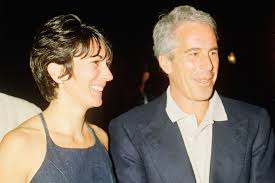
TL;DR: When President Trump signed the Epstein Files Transparency Act and the Department of Justice disgorged approximately 3.5 million pages of documents, 180,000 images, and 2,000 videos, the public received — for the first time in the machinery's existence — the raw evidentiary substrate required to perceive something far larger than a sex trafficking ring. Flight manifests. Banking records. FBI surveillance summaries. And, most lethally, the emails — thousands of private correspondences connecting a convicted pedophile's server to the founding of artificial intelligence as a commercial enterprise, the construction of global surveillance platforms, the monetization of pandemics, the engineering of sovereign debt crises, and a century-old blueprint for private dominion first drafted not in Silicon Valley or Davos but on a fog-shrouded barrier island off the coast of Georgia in 1910.
Everybody wants to talk about the island. The private jet with its leather seats and its logbook of the damned. The underage girls ferried like cargo between mansions and Caribbean shorelines. The hidden cameras, the blackmail apparatus, the rituals of degradation performed behind mahogany doors by men whose names adorn university libraries and hospital wings. And they should talk about it — what transpired on Little Saint James was a theatre of predation so methodical, so insulated by wealth, that its very existence constitutes an indictment not merely of the perpetrators but of every institution that averted its gaze for decades.
But here is the trap embedded in that revulsion: the more intensely you stare at the depravity, the less clearly you see the architecture that made it possible. Because Jeffrey Epstein was not, in any primary sense, just a predator who happened to accumulate powerful friends. He was an apparatus — a financial and intelligence intermediary who occupied the precise intersection of politics, science, banking, and philanthropy, and who transmuted privileged access into staggering profit with the mechanical regularity of a well-oiled engine. The trafficking was not the business.
The trafficking was the collateral. The island was not the product. The island was the insurance policy. The actual commodity — the thing that generated the returns, that oiled the gears of a network spanning continents and decades — was information. Raw, unprocessed, exquisitely timed information. Who was about to sign what treaty. Which bailout was being negotiated behind which closed door. What emerging technology could be monetized before the broader market understood it existed. And the ability to act on that information while the rest of humanity was still reading yesterday's newspaper.
But even that framing, surgical as it is, does not penetrate deeply enough. The real architecture of the Epstein operation — the layer that has not yet fully surfaced in public consciousness — does not begin with hedge funds or honey traps. It begins in 2002, on yet another island, with a gathering of computer scientists whose work would reshape the cognitive infrastructure of civilization. And it implicates some of the most celebrated technologists alive today: Peter Thiel, Elon Musk, Mark Zuckerberg, and Larry Page. It implicates the birth of artificial intelligence as a commercial enterprise. And it reveals a surveillance apparatus so exquisitely designed that billions of human beings feed it willingly, enthusiastically, compulsively, every waking hour, without the faintest apprehension of what they are participating in, or for whom.