










Breaking News
 U.S. evacuates 20,000 citizens as Middle East war intensifies
 MAJOR GLOBAL ECONOMIC CRISIS UPDATE: The Closure Of The Strait of Hormuz For Just 4 Days...
 Counting The Costs: Another War Is Not What America Needed
 Researchers Train Bacteria to Consume Tumors from the Inside Out
Top Tech News
 The Pentagon is looking for the SpaceX of the ocean.
 Major milestone by 3D printing an artificial cornea using a specialized "bioink"...
 Scientists at Rice University have developed an exciting new two-dimensional carbon material...
 Footage recorded by hashtag#Meta's AI smart glasses is sent to offshore contractors...
 ELON MUSK: "With something like Neuralink… we effectively become maybe one with the AI."
 DARPA Launches New Program Generative Optogenetics, GO,...
 Anthropic Outpaces OpenAI Revenue 10X, Pentagon vs. Dario, Agents Rent Humans | #234
 Ordering a Tiny House from China, what's the real COST?
 New video may offer glimpse of secret F-47 fighter
 Donut Lab's Solid-State Battery Charges Fast. But Experts Still Have Questions



Understanding Blood Pressure in a Healthy Way
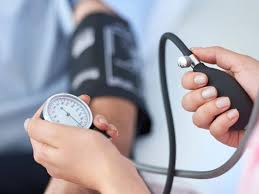
Ever since I first entered the medical field, something struck me as off about the relentless focus on blood pressure, and over time I noticed that the blood pressures people reported to me varied widely. While pondering this, a talented practitioner and mentor once told me that the current medical paradigm fixates on blood pressure because it's easier to measure than blood perfusion (healthy blood flow).
Then, as I became more acquainted with the medical field, I began to notice a consistent pattern—whenever a drug existed that could treat a number or statistic, as the years went by, the acceptable number kept on being narrowed, making more and more people eligible to take the drugs that treated the number.
Conventional Blood Pressure Perspectives
Since blood vessels are elastic fluid-filled structures, that fluid holds them under pressure. Blood pressure, in turn, is typically measured by determining how much external force is needed to exceed the artery's pressure and compress it so that blood no longer flows through it. Low blood pressure (hypotension) is a problem because it prevents blood from reaching the areas where it's needed, but in most cases, medicine instead focuses on the consequences of high blood pressure.
Within the conventional model, those consequences are:
•Weakened blood vessels become more likely to break open and leak as higher blood pressure pushes against them. This for instance, is why Emergency Rooms aggressively lower the blood pressure of patients who show up with symptoms of "hypertensive emergency," such as a severe headache and a significantly elevated blood pressure. Likewise, whenever a critical blood vessel ruptures (e.g., the aorta or one in the brain), once the bleed has been confirmed, the first step in managing it is to lower the patient's blood pressure (so less blood leaks out) after which they are sent to surgery.
•Excessive pressure on the arteries strains and damages them, causing the lining of the vessels to become damaged and gradually develop atherosclerosis.
•Excessive blood pressure damages the internal organs (termed end-organ damage), leading to premature failure and early death (e.g., from a heart attack or kidney failure)—something which also results from chronic insufficient blood flow.
Because of this, high blood pressure is viewed as one of the leading preventable causes of cardiovascular disease; therefore, ensuring that a patient achieves sufficiently reduced blood pressure is a primary focus of all medical visits.
Unfortunately, that chain of logic has quite a few holes in it.
Variable Blood Pressure
Blood pressure (BP) is highly variable, especially at the periphery, where it's typically measured. This variability—around 14 points—can lead to misdiagnoses of hypertension and unnecessary medication, which can lower BP too much, causing hypotension. One common form of this misdiagnosis is known as White Coat Hypertension, where the stress of visiting a doctor temporarily raises BP. This affects 15-30% of patients "diagnosed" with hypertension. Guidelines recommend confirming hypertension with multiple measurements, including home monitoring, but this is often not done.
Measurement errors, such as using the wrong cuff size or failing to account for differences in BP between arms, contribute to the issue. It's estimated that 25% of hypertension diagnoses are incorrect. Moreover, there is often a poor correlation between peripheral BP (limbs) and central BP (inside the aorta). Central BP, which is more closely linked to cardiovascular disease, can differ significantly from arm readings. Different BP medications also affect central and peripheral BP differently, adding complexity to treatment.