










Breaking News
 Iran Announces Fuel Rationing As Brent Sets New War Highs, After Trump Rejects Tehran's Latest O
 BREAKING: James Comey Under Arrest – Surrenders to Law Enforcement at Federal Courthouse...
 Founding Felons: Jefferson Would Be on a Watch List Today--You Might Be Next
 If Science Is a Public Good, Let China Pay for It
Top Tech News
 Researcher wins 1 bitcoin bounty for 'largest quantum attack' on underlying tech
 Interceptor-Drone Arms-Race Emerges
 A startup called Inversion has introduced Arc, a space-based vehicle...
 Mining companies are using cosmic rays to find critical minerals
 They regrew a severed nerve - by shortening a bone.
 New Robot Ants Work Like Real Insects To Build And Dismantle On Their Own
 Russian scientists 'are developing the world's first drug to delay ageing' months after
 Sam Altman's World ID Expands Biometric Identity Checks
 China Tests Directed Energy Beam That Recharges Drones Mid-Flight
 Jurassic Park might arrive sooner than expected, just with Dinobots.



U.S. evacuates 20,000 citizens as Middle East war intensifies
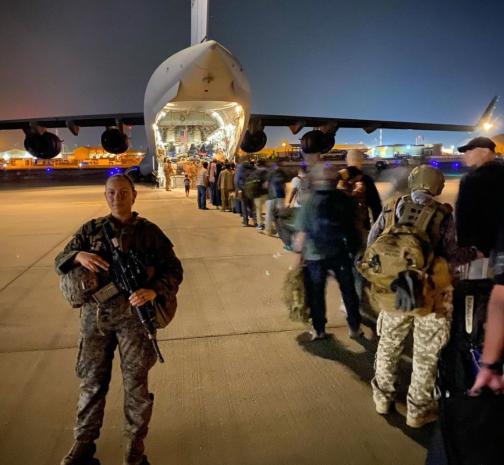
This urgent operation, directed by Secretary of State Marco Rubio, involves charter flights and ground convoys to extract citizens from a region that has rapidly become a combat zone following a major U.S.-Israeli military strike.
Assistant Secretary of State Dylan Johnson provided the update, clarifying that the 20,000 figure represents only those who are already back on U.S. soil. It does not include Americans who have relocated to other countries or who are currently in transit. To manage the exodus, the department created a dedicated Crisis Intake Form for citizens in Kuwait, Bahrain, the United Arab Emirates, Qatar, Saudi Arabia, and Israel. A 24-hour task force has already assisted more than 10,000 Americans abroad with security guidance and travel coordination.
The evacuation follows the launch of Operation Epic Fury, a joint U.S.-Israel attack on Iran that began early on Saturday morning. President Donald Trump stated the objective was to "defend the American people by eliminating imminent threats from the Iranian regime" and to ensure Iran "can never have a nuclear weapon." The strikes killed Iran's Supreme Leader Ayatollah Ali Khamenei and triggered immediate retaliatory attacks across the region.
The wealthy find alternate escape routes
The conflict has caused widespread commercial flight cancellations, stranding hundreds of thousands of Americans. This has led to a surge in demand for private escape routes. At Oman's Muscat International Airport, private flights accounted for nearly a third of all departures recently. Private security firms have been booking fleets of SUVs for the ten-hour drive from Dubai to Riyadh, Saudi Arabia, where private jets are available. The clientele includes senior executives and wealthy travelers, with charter flight prices reportedly doubling.
The human cost is mounting. Six U.S. Army Reserve soldiers were killed in an Iranian counterstrike in Kuwait. The civilian death toll in the region has surpassed 1,100. Despite the casualties, Defense Secretary Pete Hegseth declared, "America is winning," and emphasized, "Four days in, we have only just begun the fight."
The State Department has issued "Depart Now" warnings for 14 countries, urging American citizens to leave immediately. However, the administration has faced criticism over the pace and planning of the evacuation. When asked about evacuation plans, President Trump noted, "it happened all very quickly." This sentiment was echoed in practical terms when the U.S. embassy in Jerusalem informed Americans it could not assist them in leaving the country, prompting outrage from some lawmakers.
This evacuation is one of the largest non-combatant evacuation operations in recent decades, underscoring the sudden and severe breakdown of security in a strategically vital region. The Strait of Hormuz, a narrow chokepoint for global energy shipments, sits at the heart of the conflict zone, reminding us that regional instability has immediate and profound consequences for worldwide energy markets and economic stability.
The images of crowded airports and six-figure escape charters tell a story of a region descending into chaos. While the task force continues its work, the unfolding war poses a serious question: in an era of renewed great-power tension and regional conflict, are we witnessing a permanent shift where Americans abroad can no longer assume safety or a swift path home?