










Breaking News
 Press For Truth Documentaries
 Republicans Prefer War to the US Constitution and to Truth
 The Battle For The Persian Gulf And The Strait Of Hormuz Has Only Just Begun, And There...
 Braking for a Bag
Top Tech News
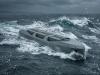 The Pentagon is looking for the SpaceX of the ocean.
 Major milestone by 3D printing an artificial cornea using a specialized "bioink"...
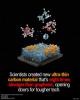 Scientists at Rice University have developed an exciting new two-dimensional carbon material...
 Footage recorded by hashtag#Meta's AI smart glasses is sent to offshore contractors...
 ELON MUSK: "With something like Neuralink… we effectively become maybe one with the AI."
 DARPA Launches New Program Generative Optogenetics, GO,...
 Anthropic Outpaces OpenAI Revenue 10X, Pentagon vs. Dario, Agents Rent Humans | #234
 Ordering a Tiny House from China, what's the real COST?
 New video may offer glimpse of secret F-47 fighter
 Donut Lab's Solid-State Battery Charges Fast. But Experts Still Have Questions



Braking for a Bag

This of course assumes the brakes need to be applied – and also that it is safe for the car to apply them.
What if it isn't?
A news report details one such incident involving the driver of an SUV that decided it was necessary to slam on the brakes – in order to avoid a plastic bag that wafted across the highway.
This is something that has happened to most of us at one time or another. The part about the bag, I mean. Or a tumbleweed. We don't slam on the brakes because we can see it is a plastic bag or a tumbleweed or some other such thing that won't cause us or our vehicle any harm if we just drive over it. But automatic emergency braking (AEB) sometimes cannot tell the difference between a bag wafting across the lanes of a highway and a child running into the path of traffic – because there is no brain interpreting what is seen by the cameras or sensed by the sensors (such as radar) that are "watching" the road ahead.
Which they aren't, really.
At least, not in the sense that human beings see things – and then use their brains to interpret what they see. A human eye (and brain) can discern the difference between a plastic bag and something it's important to brake for. AEB sometimes can't. And – as the man driving the SUV discovered – it can be very dangerous when the car decides to slam on the brakes when there's no good reason to brake. The man described almost being rear-ended by the vehicle behind him.
This was not an isolated incident.
" Federal investigations have already been opened into multiple automotive manufacturers over AEB malfunctions, with thousands of complaints filed by drivers who experienced unexpected braking events," says the MSNBC piece.
I am one of those drivers.
A couple of years ago, I was driving a brand-new press car – meaning, a new car loaned out to car journalists for the purposes of a test drive, so as to write a behind-the-wheel review – on a road with nothing in front of me when for no good reason – such as a car ahead that had slowed that I did not see or a kid in the road – the car decided there was a sudden need to brake. Hard. Like the driver in the MSNBC news story, I was very glad that I didn't get rear-ended. But the fact is that – like the man in the story – I might have been. More finely, I might have been killed.
Him, too.
It does not seem very "safe" to me.
More finely, it does not seem very "safe" to me to not have full control over a car's critical systems, such as the braking system. Not just because it is manifestly unsafe for a car to slam on the brakes for no good reason but also because it undermines agency; i.e., that it is the driver who is responsible for the driving. Legally, I mean.
Who would have been at fault if the suddenly braking car described in the news story had been rear-ended? Can the person behind the wheel who did not touch the brakes be blamed and held responsible for what the car did? For the damage – including possibly physical harm to people?