










Breaking News
 Condition 1984: Flock AI Cameras Are Surveilling Nearly Every American Across the US
 Anthropic Sues Trump Administration Over Pentagon Blacklist
 GAMECHANGER BIGGER THAN TESLA ROBOTAXI ? AI Bombshell
 Gulf Nation Launches First Direct Attack on Iran
Top Tech News
 Musk Whips Out 'Macrohard' In Disruptive Tesla-xAI Bid To Shaft Software Companies
 This Bonkers Folding X-Plane Is One Step Closer to Hitting the Skies
 Smart 2-in-1 digital microscope goes desktop or handheld as needed
 Human Brain Cells Merge With Silica To Play DOOM
 Will Yann LeCun Provide The Next Breakthrough In AI?
 Human Brain Cells Merge With Silica To Play DOOM
 Solar And Storage Could Reshape Rural Electricity Markets
 With World Seemingly At War, DARPA Finds Time To Unveil The X-76
 Renewable Water From Air.
 The world's first diesel plug-in hybrid pickup truck is here



War Abroad Should Not Mean Less Freedom At Home
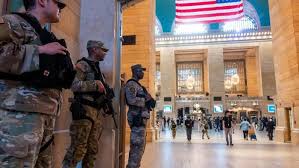
There will be endless debate about who is right and who is wrong. Some will praise our leaders, others will criticize them, and neighbors will disagree about how we got here and how events will unfold in the future. Those conversations are natural in a free society.
But there is another conversation that deserves just as much attention, one that history quietly asks every time the United States goes to war: What freedoms will Americans lose this time?
History suggests that wartime often reshapes the relationship between citizens and government.
The United States remains one of the last English-speaking countries where speech and thought are still broadly protected. That did not happen by accident. It is the inheritance of a constitutional republic built on the understanding that rights do not come from government; they come from God. The Constitution did not grant Americans their freedoms. It recognized them and placed limits on what government may do.
Yet when we look honestly at the past century, a pattern becomes difficult to ignore. Nearly every major war America has entered has been followed by some erosion of liberty at home.
During World War I, Congress passed the Espionage Act of 1917, followed by the Sedition Act of 1918. Under these laws, Americans could be arrested and imprisoned simply for criticizing the war or discouraging military enlistment. Speech that would normally fall under the protection of the First Amendment suddenly became criminal. One of the most famous cases involved Eugene V. Debs, a political leader who received a 10-year prison sentence for delivering a speech opposing the war and the draft.
The war eventually ended, but the Espionage Act remains on the books more than a century later.
World War II produced an even more direct violation of civil liberties. After the attack on Pearl Harbor, the federal government issued Executive Order 9066, authorizing the forced relocation of Japanese Americans living on the West Coast. More than 120,000 people, mostly American citizens, were removed from their homes and placed in internment camps. Families lost farms, businesses, and property, and people were detained without criminal charges or trials. The Supreme Court upheld the policy at the time, though it is now widely regarded as one of the most troubling civil liberties failures in modern American history.
The war ended and the camps were eventually closed, but the lesson remained clear: in times of fear and national emergency, the rights of citizens can be pushed aside.
The Cold War era introduced another form of government intrusion into American life. Fear of communist infiltration led to sweeping investigations into the political beliefs of citizens. The House Un-American Activities Committee summoned Americans to testify about their associations and views, while the Smith Act allowed prosecutions for advocating certain political ideas. Teachers, actors, writers, and government employees were blacklisted or pressured into oaths of loyalty. Careers were destroyed not because someone had committed a crime, but because they held—or were suspected of holding—the wrong political beliefs.