










Breaking News
 It Is Being Projected That "Peak War Panic" Could Hit The Global Financial System In 1 To
 X Users Find Their Real Names Are Being Googled in Israel After Using X Verification Software...
 BlackRock Stops Withdrawals -- You've Been Warned - Dr. Kirk Elliott
 LIVE: Is Bibi Missing? CIA to Arrest Tucker? Palantir's AI Kill Chain Revealed | Sunday w/ Seth
Top Tech News
 Musk Whips Out 'Macrohard' In Disruptive Tesla-xAI Bid To Shaft Software Companies
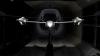 This Bonkers Folding X-Plane Is One Step Closer to Hitting the Skies
 Smart 2-in-1 digital microscope goes desktop or handheld as needed
 Human Brain Cells Merge With Silica To Play DOOM
 Will Yann LeCun Provide The Next Breakthrough In AI?
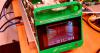 Human Brain Cells Merge With Silica To Play DOOM
 Solar And Storage Could Reshape Rural Electricity Markets
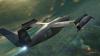 With World Seemingly At War, DARPA Finds Time To Unveil The X-76
 Renewable Water From Air.
 The world's first diesel plug-in hybrid pickup truck is here



Is Gravity Really a Force?
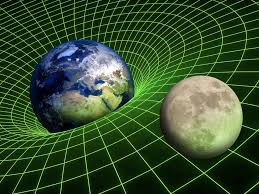
Understanding Gravitational Acceleration (g) - The Force That Keeps Us Grounded
Gravitational acceleration, represented by the symbol "g," is one of the most fundamental concepts in physics that affects everything around us. In this video, we break down what gravitational acceleration really means and why it matters.
What is Gravitational Acceleration?
Gravitational acceleration is the rate at which an object speeds up as it falls freely under the influence of gravity alone. On Earth, this value is approximately 9.8 meters per second squared (m/s²). This means that for every second an object falls in a vacuum (without air resistance), its velocity increases by about 9.8 meters per second.
Key Characteristics:
Measured in m/s²: This unit tells us how much the speed changes each second
Constant increase: Objects experience a steady, predictable acceleration as they fall
Vector quantity: Gravitational acceleration has both magnitude (the 9.8 m/s² value) and direction (always pointing toward the center of the massive body, like Earth's core)