










Breaking News
 Iran's Mosaic Defense
 They're not even hiding it anymore...
 The UK Just Took an Even Darker Turn...
 "Fertilizer Shock": The Closure Of The Strait Of Hormuz Could Cause Widespread Global Food
Top Tech News
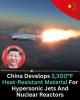 Scientists at the Harbin University of Science and Technology have pioneered a sophisticated...
 Researchers have developed a breakthrough "molecular jackhammer" technique...
 Human trials are underway for a drug that regrows human teeth in just 4 days.
 Singularity Update: You Have No Idea How Crazy Humanoid Robots Have Gotten
 Musk Whips Out 'Macrohard' In Disruptive Tesla-xAI Bid To Shaft Software Companies
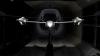 This Bonkers Folding X-Plane Is One Step Closer to Hitting the Skies
 Smart 2-in-1 digital microscope goes desktop or handheld as needed
 Human Brain Cells Merge With Silica To Play DOOM
 Will Yann LeCun Provide The Next Breakthrough In AI?
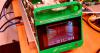 Human Brain Cells Merge With Silica To Play DOOM



Oil surge exposing cracks in $1.8 trillion private credit market
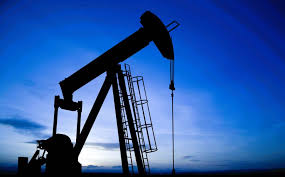
With the Iran war sending oil prices into a vertical climb, the resulting shockwaves across global markets have investors balancing their portfolios like a high?stakes game of Jenga on a trembling table.
The problem isn't so much oil prices at over US$100 per barrel. Surging energy is merely a trigger — the thing that sets in motion a chain of events that destabilizes credit markets. In this case, the pulling out of blocks in hopes of keeping the whole financial tower from coming crashing down and causing broader trauma.
The job for financial analysts now is to identify where the fragilities lie and the extent to which they could trigger a 2008-like contagion event. At the moment, most of the focus is on the $1.8 trillion private credit space. And arguably no one is doing a better job of connecting the dots than Bank of America strategist Michael Hartnett.
As Hartnett wrote in a recent report: "Asset performance in 2026 is more ominously close to price action seen from mid'07 to mid'08" than most in the market want to admit. He detects "subprime tremors" at a moment when Wall Street is "ominously trading" in a 2007-2008 "analog."
That period, 19 years ago, also unfolded amidst a doubling of oil prices, which helped set in motion the reckoning to come at Lehman Brothers and Bear Stearns. The resulting trauma saw US lawmakers race to deploy tidal waves of cash, and the US Federal Reserve implement quantitative easing.
The trouble today is that about 40% of the private credit markets are experiencing negative cash flow amid deteriorating geopolitical conditions. The industry's tendency has been to paper over the cracks, often using so-called payment-in-kind (PIK) debt schemes. Now, though, default rates are increasing fast, and the cracks are becoming harder to contain.
Even before bombs fell on Tehran, private credit markets were quaking. For months, the debt markets essentially priced in a series of Fed rate cuts that haven't materialized. In fact, even before oil prices surged, Fed officials left their January policy meeting suggesting rate hikes might be needed.
Despite slowing employment, the US economy proved more robust than expected, with inflation higher than feared. The real estate markets took the Fed's U-turn badly. Meanwhile, the upheaval in the software industry, which relies heavily on private credit, was more intense than expected. And the disruption from artificial intelligence is proving to be quite the accelerant.
Now, the surge in oil is causing investors to pull out the most precarious Jenga blocks all at once. It's not that simple, of course. The problem isn't so much leverage in the private credit space. It's that bank loans to the sector are highly leveraged.