










Breaking News
 Qatar Expels Iranian Diplomats After Strike On LNG Hub; Israel Attacks Iran's Navy In Caspian Se
 IMEC: Trump's War With Iran Is About Global Trade. Period.
 Rothbard Never Abandoned His Principles
 Trump continues to expel MAGA's best members
Top Tech News
 Scientists at the Harbin University of Science and Technology have pioneered a sophisticated...
 Researchers have developed a breakthrough "molecular jackhammer" technique...
 Human trials are underway for a drug that regrows human teeth in just 4 days.
 Singularity Update: You Have No Idea How Crazy Humanoid Robots Have Gotten
 Musk Whips Out 'Macrohard' In Disruptive Tesla-xAI Bid To Shaft Software Companies
 This Bonkers Folding X-Plane Is One Step Closer to Hitting the Skies
 Smart 2-in-1 digital microscope goes desktop or handheld as needed
 Human Brain Cells Merge With Silica To Play DOOM
 Will Yann LeCun Provide The Next Breakthrough In AI?
 Human Brain Cells Merge With Silica To Play DOOM



FAA greenlights eVTOL aircraft operations across the USA
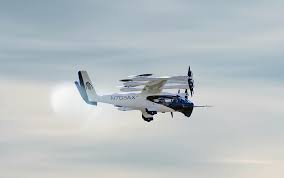
I've been writing about eVTOLs for more than a decade now; they're everything a futurist could want in the transport system of tomorrow. Vastly quieter and cheaper than helicopters, they promise to democratize short-range flights with Uber-adjacent pricing, and unlock 3-D commuting with rooftop-to-rooftop urban hops. They're clean, they're quick, they're super maneuverable – and they tend to look all sexy and sci-fi, which doesn't hurt at all.
They're also taking forever to make it through America's FAA type certification process for commercial use. The FAA requires all commercial aircraft to be as safe as your average airliner – the probability of failure is expected to be around one in a billion hours of flight, about 1,500 times safer per mile than driving.
That's a high enough bar to clear if you're Airbus or Boeing making a bog-standard tube with wings, but it's proving extremely grueling for innovators trying to bring a whole new category of aircraft to market, capable of vertical takeoff, then transitioning to cruise flight by a variety of different means.
But it seems the US President is ready to deregulate these new air taxis into a commercial reality. US Transportation secretary Sean Duffy announced the eVTOL Integration Pilot Program (eIPP) at a press conference on Monday.
The eIPP has approved eight operational pilot programs, which will allow a range of leading American eVTOL companies to begin limited commercial flights, from Florida and Manhattan across as far west as Texas and Utah. These eIPP operations will include passenger flights as well as cargo and logistics operations.
The eIPP is part of President Trump's "Unleashing American Drone Dominance" executive order, an aggressive push for the FAA to loosen regulations and speed up approvals for a broad range of unmanned aerial systems (UAS) and next-gen manned electric aircraft alike. The intent here is to get drone deliveries, eVTOL flights and cargo operations happening at scale on a highly accelerated schedule, to stimulate the rapid expansion of "trusted" American drone manufacturing across the civil, military and commercial sectors.
It's also clearly a catch-up play. China has absolutely dominated the consumer and commercial drone markets since aerial steadicam products like the DJI Phantom first hit global shelves around 2013, and the Chinese government made its own moves several years ago to ensure it would be out in front of the West on passenger-carrying eVTOLs as well. eHang, for example, has been flying fully-certified commercial passenger operations since 2023 ... In pilotless, autonomous aircraft, no less.
Recent conflicts in Ukraine and Iran have made it crystal clear that drones are an absolutely indispensable part of modern warfare, cheap enough to give the little guy an advantage over the big bully, and there's no doubt this initiative plays into that narrative as well.