










Breaking News
 Is America Ready For War? | Palmer Luckey From #464 | The Way I Heard It
 The Last Time The Financial System Shifted Like This, A New Class Of Millionaires Was Made
 HEALTH SOVEREIGNTY: Javier Milei's Argentina Follows the US and Officially Leaves...
 Ready For War? New B-21 Raider Activity Spotted Over Mojave Desert
Top Tech News
 Scientists at the Harbin University of Science and Technology have pioneered a sophisticated...
 Researchers have developed a breakthrough "molecular jackhammer" technique...
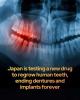 Human trials are underway for a drug that regrows human teeth in just 4 days.
 Singularity Update: You Have No Idea How Crazy Humanoid Robots Have Gotten
 Musk Whips Out 'Macrohard' In Disruptive Tesla-xAI Bid To Shaft Software Companies
 This Bonkers Folding X-Plane Is One Step Closer to Hitting the Skies
 Smart 2-in-1 digital microscope goes desktop or handheld as needed
 Human Brain Cells Merge With Silica To Play DOOM
 Will Yann LeCun Provide The Next Breakthrough In AI?
 Human Brain Cells Merge With Silica To Play DOOM



Who Needs Glyphosate?
HHS Secretary and Make America Healthy Again (MAHA) founder Robert F. Kennedy, Jr.'s endorsement of the order has created a firestorm in that health-interested base.
On Feb. 22, Kennedy conducted triage explanations to his base with this statement:
"Unfortunately, our agricultural system depends heavily on these chemicals." He went on to post that "if these inputs disappeared overnight, crop yields would fall, food prices would surge, and America would experience a massive loss of farms even beyond what we are witnessing today. The consequences would be disastrous."
Kennedy then described the many weed control alternatives that are being developed. All of us farmers in the nonchemical community already use many of these innovative alternatives: lasers, AI-driven wipes, steam nozzles, cover crop crimping, and soil balancing. The grain farmers I patronize for our chicken and pig feeds do not use glyphosate or genetically modified organisms (GMOs). We pay a slight premium, but these farmers have great yields and are certainly not going out of business like many more conventional operations.
This showdown has been a long time developing. On Apr. 14, 2025, The Wall Street Journal's Patrick Thomas reported that "Bayer said it could stop producing the world's most popular weed killer unless it gets court protection against lawsuits blaming the herbicide for causing cancer." Bayer and friends tried to slip in liability protection in an appropriations bill earlier this year, but the effort failed.
With thousands of lawsuits, many of them winning, still scheduled for court hearings, and its multibillion-dollar war chest to fight them and/or settle them impacting profits, Bayer, manufacturer of the popular Roundup brand, is desperate to shed this liability. Most of the time, things like this executive order happen after long-term wrangling and cogitating behind the curtain, and I suspect that is the case now.
At the risk of irritating my MAHA friends, I take umbrage with this whole sordid affair because glyphosate is a deadly poison, is not needed, and certainly does not jeopardize American security. Its use is primarily on genetically modified corn and soybeans. But consider that nearly half of America's corn production goes to ethanol fuel; it has nothing to do with food.
What about soybeans? Half of them are exported and not even used in America. Roughly 40 percent of glyphosate is made by Bayer in the United States, Belgium, and Argentina, which are all friendlies. If we eliminated half the corn and half the soybeans because they aren't needed for food, we'd only need half the glyphosate, which is nearly all manufactured either domestically or in friendly nations.
That's giving the benefit of the doubt to the inherent need for glyphosate, which is a dubious argument. It's like demanding special concessions for cocaine because some addicts have an inherent need for cocaine. While they may be addicted, arguing that funding and fueling their continued addiction is necessary for their survival is dubious at best and erroneous at worst.