










Breaking News
 War Saves Lives! The Peace President's Controlled-Chaos Terror Attack On America's Food, Gas
 Episode 468 | The 6G Push, Paraquat Threat, and the Modern Maternity Crisis
 EXCLUSIVE: ARE YOU AWAKE YET? - Max Igan Exposes The Epstein, Transhumanist...
 Man Successfully Designs mRNA Vaccine To Treat His Dog's Cancer
Top Tech News
 Scientists at the Harbin University of Science and Technology have pioneered a sophisticated...
 Researchers have developed a breakthrough "molecular jackhammer" technique...
 Human trials are underway for a drug that regrows human teeth in just 4 days.
 Singularity Update: You Have No Idea How Crazy Humanoid Robots Have Gotten
 Musk Whips Out 'Macrohard' In Disruptive Tesla-xAI Bid To Shaft Software Companies
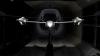 This Bonkers Folding X-Plane Is One Step Closer to Hitting the Skies
 Smart 2-in-1 digital microscope goes desktop or handheld as needed
 Human Brain Cells Merge With Silica To Play DOOM
 Will Yann LeCun Provide The Next Breakthrough In AI?
 Human Brain Cells Merge With Silica To Play DOOM



'Dune' tried to warn us against AI
Even the biggest fans of Dune know that Frank Herbert's classic sci-fi epic quickly veers into the fantastical. Giant subterranean sandworms measuring 1,500 feet long; a narcotic that fuels interstellar travel and bends a user's perception of space-time; a mystical cabal of eugenicist witches—the list goes on. But there is at least one story within the sprawling series that feels increasingly like a premonition rather than plot point: the Butlerian Jihad.
Taking place well before the events of Dune itself, the Butlerian Jihad was a nearly century-long, interplanetary revolt that saw humanity racing to destroy all of its advanced computers, artificial intelligence systems, and other "thinking machines." The underlying cause wasn't that sentient robots were attempting to eradicate humans, however. Instead, our species' overreliance on the programs had generated an upper ruling class of technocrats that soon presided over all aspects of society. It wasn't so much that humanity was afraid of AI, as much as they were afraid of the people who designed and controlled the AI. The Butlerian Jihad ultimately resulted in the obliteration of all thinking machines, as well as a wholesale ban on any new robotic creations.
"Thou shalt not make a machine in the likeness of a human mind," reads one of the ensuing, in-universe religious texts.
Dune's author didn't necessarily intend the Butlerian Jihad to be an ominous warning. If anything, it was a clever way to bypass dealing with distant future AI concepts and focus on Herbert's interests in power dynamics, gender, and societal structures. Even so, it's hard not to get a little weirded out by a passage from Dune that is once again making the rounds on social media.
"Once men turned their thinking over to machines in the hope that this would set them free. But that only permitted other men with machines to enslave them," a character explained to protagonist Paul Atreides early in the first novel.
Whether or not life imitates art remains to be seen. That said, there's no reason not to poke some fun at the current generation of supposed AI in the meantime:
Perfect
— much like your posting (@mlyp.bsky.social) March 18, 2026 at 6:29 PM
[image or embed]