










Breaking News
 This Is the Only Way to Save the United States
 On the Road to Armageddon
 Join The US Military – Kill And Die For Israel
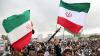 Forget Trump's flailing -- Iran's the one without an endgame
Top Tech News
 Scientists at the Harbin University of Science and Technology have pioneered a sophisticated...
 Researchers have developed a breakthrough "molecular jackhammer" technique...
 Human trials are underway for a drug that regrows human teeth in just 4 days.
 Singularity Update: You Have No Idea How Crazy Humanoid Robots Have Gotten
 Musk Whips Out 'Macrohard' In Disruptive Tesla-xAI Bid To Shaft Software Companies
 This Bonkers Folding X-Plane Is One Step Closer to Hitting the Skies
 Smart 2-in-1 digital microscope goes desktop or handheld as needed
 Human Brain Cells Merge With Silica To Play DOOM
 Will Yann LeCun Provide The Next Breakthrough In AI?
 Human Brain Cells Merge With Silica To Play DOOM



Japan Is in Trouble. So Are You.
Japanese Prime Minister Sanae Takaichi is in Washington today for what was supposed to be a summit about trade deals and China strategy. Instead, she's walking into the White House in crisis mode, with Trump pressing her to send warships to the Strait of Hormuz and her economy bleeding from an oil shock that hits Japan harder than almost any country on earth.
She said no to the warships. Easy call, given the mess this war has already become.
The hard part is what comes next. Because Japan isn't just facing an energy crisis — it was already in serious financial trouble before the first missile launched. And the Hormuz closure just made a bad situation much worse.
If you're wondering why any of this should matter to you — today's essay is for you.
Japan's Oil Problem Is Unlike Almost Anyone Else's
Let's start with geography. Japan is an island nation with no meaningful domestic energy production. It imports 87% of its total energy supply — not just oil, everything. And of its crude oil, 95% comes from the Middle East. Roughly 70% of that travels through the Strait of Hormuz.
With Hormuz effectively closed, two-thirds of Japan's oil supply is currently blocked, diverted, or severely disrupted. Not at risk. Not threatened. Gone.
To appreciate what that means, compare it to other major economies. The U.S. is a net energy exporter — largely insulated from the supply shock by its own production. Europe spent three years scrambling to replace cheap Russian gas with expensive LNG after 2022 — a painful, self-inflicted wound — but at least they had a head start building alternative supply chains before this crisis hit. China, despite being the world's largest oil importer, appears to have preferential access through the strait — Iranian-flagged and Chinese-owned vessels have been among the few still transiting.
Japan has none of those advantages. No domestic production worth mentioning. No alternative pipeline routes. No preferential access through Hormuz. Just reserves — and a clock that started ticking on February 28th.
Now, if I were Japanese, this whole situation would probably take me straight back to 1973. The Arab oil embargo hit Japan like a freight train. The country imported virtually all of its oil — some things never change — and almost all of it came from the Middle East. When supply was suddenly cut, prices quadrupled almost overnight. Inflation surged above 20%. Panic buying emptied store shelves. The government imposed emergency rationing on gasoline and heating fuel. Industrial output collapsed. It was, by any measure, the worst peacetime economic crisis Japan had experienced since the war.
But look at where Japan sits today. Same island nation. Same near-total dependence on Middle Eastern oil. Same chokepoint. Except this time, Japan is walking into the crisis already carrying the heaviest debt load in the developed world, an aging population, and a central bank that has spent thirty years distorting its financial system to keep the whole thing from collapsing. The 1970s shock hit a Japan that was young, growing, and relatively fiscally healthy. This one is hitting a Japan that is none of those things.
Tokyo is responding the way governments always respond — throw what you have at the problem and hope for the best. Before boarding her flight to Washington to meet Trump, Takaichi announced the largest emergency oil reserve release in Japan's history — 80 million barrels, part of the IEA's record coordinated release of 400 million barrels across member nations. Japan holds roughly 254 days of stockpiles in total, so the lights aren't going off next Tuesday. But reserve releases buy time. They don't reopen a strait. And Japan's LNG reserves — critical for electricity generation — are a different story entirely, covering only about two to four weeks of stable demand.