










Breaking News
 'Tax resistance' gains attention amid ICE protests, Iran war -- and IRS penalties could foll
 Iran Ready To Let Japanese Ships Use Hormuz As Chinese, Indian Tankers Already Allowed Passage
 He Built a Better Way to Live Off-Grid (40 Acres)
 CHECKMATE SCHUMER: Trump Announces He Will Deploy ICE to Airports for Security and Immediate...
Top Tech News
 We Build and Test Microwave Blocking Panels - Invisible to Radar
 Man Successfully Designs mRNA Vaccine To Treat His Dog's Cancer
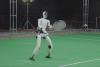 Watch: Humanoid robot gets surprisingly good at tennis
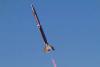 Low-cost hypersonic rocket engine takes flight for US Air Force
 Your WiFi Can See You. Here's How.
 Decentralizing Defense: A $96 Guided Rocket Just Put Precision Warfare into the Hands of the People
 Israel's Iron Beam and the laser future of missile defense
 Scientists at the Harbin University of Science and Technology have pioneered a sophisticated...
 Researchers have developed a breakthrough "molecular jackhammer" technique...
 Human trials are underway for a drug that regrows human teeth in just 4 days.



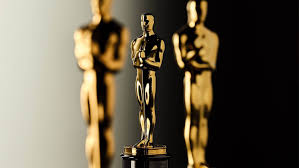
The Oscars Died Last Weekend...Did Anyone Even Notice?
What surprised me was who said it. This is a person who is deeply, spiritually committed to things like what movies are in theaters and new fictional television shows. She loves the arts. She listens to jazz. She goes to see Broadway plays. She watches every prestige movie she can and regularly comments about what media has won what award. She follows celebrity gossip with the focus of a Vatican archivist. Her interests sit precisely at the intersection of everything the Oscars supposedly celebrates and is entrenched in.
And yet she missed the award show entirely.
That, in a nutshell, is the problem. Over the last several years, the Oscars have quietly drifted from being the cultural event, the night when the entire entertainment world stopped to watch, into something closer to an industry banquet that occasionally spills onto television. The ceremony still arrives with the same self-importance it had in the 1990s, but the culture around it has moved on. What used to feel like a shared national moment now feels more like political rally fused with fashion show and a desperate attempt to take 120 second acceptance speeches to prove one's IQ is not in double digits.
Part of the issue is that the movies the Academy rewards are increasingly invisible to the people watching at home. The ceremony still talks as if the audience has seen every nominee, debated every performance, and formed passionate opinions about the cinematography categories. In reality, most viewers have maybe heard of one of the films, vaguely recognize a second, and accidentally streamed a third while half-watching it on their phone during laundry. When the biggest award of the year goes to a movie the average viewer hasn't encountered in any meaningful way, the victory lap feels oddly private, like a group of insiders congratulating each other for something the rest of the room didn't witness.
The show itself doesn't help. The broadcast has developed an identity crisis in formal wear. Every year producers seem to wrestle with the same question: is the Oscars ceremony supposed to celebrate movies, chase television ratings, or gently lecture the audience about the importance of humanitarian issues? The result is a three-hour spectacle that manages to feel both desperate for attention and slightly resentful that anyone expects it to be entertaining. There are bits that go on too long, music that nobody seems to have asked for, and awkward attempts to manufacture viral moments that land with the energy of a corporate retreat icebreaker.
Meanwhile, the Oscars no longer function as the center of the film universe the way they once did. For decades the ceremony acted as a kind of cultural referee, the place where the industry gathered to declare what counted as the year's great movie. That authority has eroded. Today the internet hosts a thousand parallel award ceremonies every day. Critics release their own rankings. Fans debate endlessly on movie apps. TikTok spins up new waves of film discourse every afternoon. Entire YouTube channels are dedicated to explaining why the Academy got it wrong in 1997, 2013, or last year. By the time the envelopes are opened on Oscar night, the real arguments about movies have already happened somewhere else.