










Breaking News
 Exodus Propulsion and the Exodus Force aka Electrostatic Pressure Force
 Pulsar Fusion Ignites Plasma in Nuclear Rocket Test
 Details of the NASA Moonbase Plans Include a Fifteen Ton Lunar Rover
 Celebrating Adam Smith's Wealth of Nations at 250 Years
Top Tech News
 The Secret Spy Tech Inside Every Credit Card
 Red light therapy boosts retinal health in early macular degeneration
 Hydrogen-powered business jet edges closer to certification
 This House Is 10 Feet Underground and Costs $0 to Cool. Why Is It Banned in 30 States?
 Cold Tolerant Lithium Battery?? Without Heaters!? Ecoworthy Cubix 100 Pro!
 DLR Tests Hydrogen Fuel for Aviation at -253°C
 Watch: China Claims Cyborg Breakthrough To Build An "Army Of Centaurs"
 Instant, real-time video AI is now upon us, for better and worse
 We Build and Test Microwave Blocking Panels - Invisible to Radar
 Man Successfully Designs mRNA Vaccine To Treat His Dog's Cancer



Iran Arrests Dozens In Starlink Black Market Network
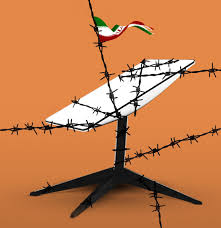
These satellite internet terminals have become popular among opposition and activist networks operating in the country amid an ongoing nationwide internet blackout during the U.S.-Iran conflict.
Sardar Ahmad-Reza Radan, commander-in-chief of the Iranian police, was quoted by the outlet as saying, "From the beginning of the Ramadan War, 48 key members of networks, cells, anti-revolutionary groups, and espionage rings were arrested, and 139 Starlink devices were also discovered."
With the U.S.-Iran conflict entering its second month, the internet-tracking firm NetBlocks reported earlier that Iran has been under an internet blackout for over 720 hours.
Before the conflict broke out, there were reports that U.S.-aligned activist NGOs had smuggled in thousands of these satellite terminals to evade a ground-based internet blackout designed to stop the flow of information and prevent widespread uprisings. A Starlink terminal connects to a satellite in low Earth orbit that beams internet hundreds, if not thousands, of miles away from ground-based repeaters in surrounding countries.
We also tracked the black-market prices of Starlink terminals in Iran shortly before the conflict erupted, citing a report that said these terminals, which normally cost several hundred dollars in the West, were going for as much as $4,000.
The internet blackout across Iran has created an information vacuum that is being filled by state-controlled narratives, while the US and Israel have hoped to run information operations on the ground through Starlinks.