










Breaking News
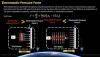 Exodus Propulsion and the Exodus Force aka Electrostatic Pressure Force
 Pulsar Fusion Ignites Plasma in Nuclear Rocket Test
 Details of the NASA Moonbase Plans Include a Fifteen Ton Lunar Rover
 Celebrating Adam Smith's Wealth of Nations at 250 Years
Top Tech News
 The Secret Spy Tech Inside Every Credit Card
 Red light therapy boosts retinal health in early macular degeneration
 Hydrogen-powered business jet edges closer to certification
 This House Is 10 Feet Underground and Costs $0 to Cool. Why Is It Banned in 30 States?
 Cold Tolerant Lithium Battery?? Without Heaters!? Ecoworthy Cubix 100 Pro!
 DLR Tests Hydrogen Fuel for Aviation at -253°C
 Watch: China Claims Cyborg Breakthrough To Build An "Army Of Centaurs"
 Instant, real-time video AI is now upon us, for better and worse
 We Build and Test Microwave Blocking Panels - Invisible to Radar
 Man Successfully Designs mRNA Vaccine To Treat His Dog's Cancer



Sony "Temporarily Suspends" Memory Card Orders In Japan As Global Memory Crunch Worsens

Now, Sony Japan is warning that the global memory shortage has become severe enough to force a temporary halt to new orders for memory cards, as supply can no longer keep up with production needs.
"Due to the global shortage of semiconductors (memory) and other factors, it is anticipated that supply will not meet demand for CFexpress memory cards and SD memory cards for the foreseeable future," Sony wrote in a press release.
Sony explained that, due to the memory shortage, it has "decided to temporarily suspend the acceptance of orders from our authorized dealers and from customers at the Sony Store."
The suspension covers Sony's CFexpress Type A cards in 240GB, 480GB, 960GB, and 1.92TB sizes, as well as CFexpress Type B cards in 240GB and 480GB. It also affects Sony's high-end SDXC/SDHC lineup, including 64GB, 128GB, and 256GB TOUGH models, as well as SF-M and SF-E series cards ranging from 64GB to 512GB.
What this suggests is that even some of the largest consumer electronics companies are not immune to the global memory shortage, which is rippling across the world due to surging demand from data centers.
In February, TrendForce raised its Q1 2026 DRAM contract price forecast to 90%-95% quarter-over-quarter, while forecasting NAND flash prices would jump 55%-60% over the same period. Phison's CEO warned the NAND shortage could force some consumer electronics companies to shutter production lines this year.
Last week, Sony was forced to raise prices on PlayStation consoles, which infuriated some gamers.
"Hot take but I think things should get cheaper the more old that they are, crazy idea," one X user said.
We told readers in late January: "If you want to buy any consumer goods, PCs, or smartphones ... do it now, as it is for sure all the prices will be increased. Take an average PC, for example. The ratio of memory chips in the BoM [bill of materials] cost has increased from some 15% to almost 40%."
There is hope: We detailed last week that "Google's DeepSeek Moment," introducing TurboQuant, sent memory stocks spiraling lower because its compression algorithm for large language models and vector search engines shrinks the amount of memory needed (report here).