










Breaking News
 The Great Alzheimer's Scam and the Proven Cures They've Buried for Billions
 Why Hershey is swapping Reese's ingredients -- and what it means for how they'll taste
 The Forgotten 1930s Survival Soup Balls. Make It Once, Eat for 2 Years.
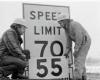 Is Drive 55 Going to Make a Comeback?
Top Tech News
 The Secret Spy Tech Inside Every Credit Card
 Red light therapy boosts retinal health in early macular degeneration
 Hydrogen-powered business jet edges closer to certification
 This House Is 10 Feet Underground and Costs $0 to Cool. Why Is It Banned in 30 States?
 Cold Tolerant Lithium Battery?? Without Heaters!? Ecoworthy Cubix 100 Pro!
 DLR Tests Hydrogen Fuel for Aviation at -253°C
 Watch: China Claims Cyborg Breakthrough To Build An "Army Of Centaurs"
 Instant, real-time video AI is now upon us, for better and worse
 We Build and Test Microwave Blocking Panels - Invisible to Radar
 Man Successfully Designs mRNA Vaccine To Treat His Dog's Cancer



Why I Wrote And Just Released This Book – 'The New Economics of Technocracy: You Will Own Nothin
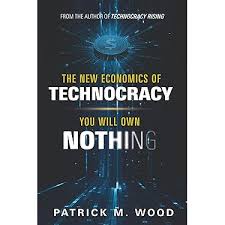
The first time I put the endgame into words was in Technocracy Rising, published in 2015. I wrote then that if today's technocrats were meticulously working toward a scientific dictatorship and applying a specific strategy to get there, they would have a specific list of criteria that must be met before "game over" is called. I asked: when that day comes, will they have the guts to shut the old world order down and simply declare the "system" as dictator?
That was eleven years ago. They have now called "game over." And it is moving so fast that society and governments cannot keep up to regulate or stop it.
That is why I wrote this book.
Why the Phrase "You Will Own Nothing" Is Not a Slogan — It Is an Engineering Specification
In November 2016, the World Economic Forum released a promotional video titled "8 Predictions for the World in 2030." The first prediction declared: You'll own nothing. And you'll be happy. They later scrambled to reframe it as one possible "scenario" among many. But the sentence was honest in a way their subsequent documents have never been.
Most people interpreted it through a twentieth-century lens. Governments would confiscate property. Communism would return in new clothing. Jackbooted bureaucrats would knock on doors. But this fundamentally misunderstands the sophistication of the mechanism now being deployed. The architects of this system have no need for crude confiscation. They are building something far more elegant — a world in which ownership itself becomes a meaningless concept, replaced by tokenized access permissions administered through digital platforms that no individual can control or exit.
The subtitle of this book is not a slogan. It is an engineering specification. And to understand how it works, you need to understand a distinction that the financial media almost never discusses: the difference between a payment token and an asset token. These are the two instruments at the core of the system being built right now.
A payment token replaces your money. A stablecoin — a digital coin pegged to the dollar — looks and feels like a dollar, but every transaction is recorded on a blockchain, every purchase is traceable, and because the token is programmable, its behavior can be governed by computer code. The issuer can, in principle, embed conditions into the token: where you can spend it, what you can buy with it, when it expires, and whether your access can be revoked. A dollar bill is like water — it flows wherever you direct it, no questions asked. A programmable stablecoin is like water flowing through a pipe system that somebody else built, with valves somebody else controls.