










Breaking News
 The Great Alzheimer's Scam and the Proven Cures They've Buried for Billions
 Why Hershey is swapping Reese's ingredients -- and what it means for how they'll taste
 The Forgotten 1930s Survival Soup Balls. Make It Once, Eat for 2 Years.
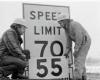 Is Drive 55 Going to Make a Comeback?
Top Tech News
 The Secret Spy Tech Inside Every Credit Card
 Red light therapy boosts retinal health in early macular degeneration
 Hydrogen-powered business jet edges closer to certification
 This House Is 10 Feet Underground and Costs $0 to Cool. Why Is It Banned in 30 States?
 Cold Tolerant Lithium Battery?? Without Heaters!? Ecoworthy Cubix 100 Pro!
 DLR Tests Hydrogen Fuel for Aviation at -253°C
 Watch: China Claims Cyborg Breakthrough To Build An "Army Of Centaurs"
 Instant, real-time video AI is now upon us, for better and worse
 We Build and Test Microwave Blocking Panels - Invisible to Radar
 Man Successfully Designs mRNA Vaccine To Treat His Dog's Cancer



Expect Electricity Prices To Rise Further, Analysts Warn
Whether you take a "crisis" or "more nuanced view" of the increases - the analysis offers both - one thing is likely, according to the report: "Record levels of [investor-owned utility] rate increase requests & regulatory approvals suggest additional near-term price increases absent policy/market actions."
There were $18 billion in rate increases proposed last year, according to the analysis, and about two-thirds of utility rate proposals were approved from 2021-2025.
IOU revenue increase requests in 2025 "exceeded any point since the mid-1980s, suggesting continued price increases in near term as regulators consider the requests," the analysis said.
In the "crisis view" of electricity price drivers, national prices have surged since 2019 through 2025, up 33%. There are larger increases in California, the Northeast and parts of the Mid-Atlantic. A third of U.S. households spend more than 5% of their income on electricity, according the report.
The "nuanced" view notes that price increases have largely tracked inflation, and 29 states saw a decline in inflation-adjusted prices from 2019-2025. In most areas, electricity burdens are lower than they were in 2019.
Residential customers "have faced larger recent retail electricity price increases than have commercial and industrial customers," the analysis said.
From 2019 to 2025 the nominal price of a kilowatt-hour rose 33% for residential customers, 26% for commercial and 27% for industrial. All-sector average retail electricity prices increased 5.3% in 2025 compared to 2024, they said.
"Residential retail electricity price increases have been significant: broadly in line with some other household expenditures but higher than others," researchers said.
The average U.S. residential price of electricity, in nominal dollars, went from 13 cents/kWh in 2019 to 17.3 cents/kWh in 2025. Commercial customers saw prices increase from 10.7 cents/kWh to 13.4 cents/kWh. And industrial prices went from 6.8 cents/kWh to 8.6 cents/kWh.
The primary drivers of recent price increases include fuel and wholesale supply, distribution costs, the cost of new generation, transmission costs, storm recovery and capacity prices, the report said.
LBNL and Brattle's analysis is a data update to 2025 work they did on factors driving electricity prices.