










Breaking News
 Iran's mountain shelters offer Taiwan a China survival playbook
 Exposing the True Evils of the Uniparty: Soros Money, Surveillance, and the Rise of a Third Party
 18,000+ Kids Injected With Vaccines While Unconscious At Colorado Hospital
 58% Of Americans Get Their News From Four Left-Leaning Aggregators; Study Finds
Top Tech News
 Modular phone promises total privacy at the flick of a switch
 Genetically Engineered War Dogs for 134 Pound Cyborg Dire Wolves Now – Later 600 Pound Wolves
 They're Quietly REPLACING Our Food With THIS… And Nobody Is Talking About It!
 Chicago Opens First "Teacher-Free" AI School as Global Push Accelerates
 Solar Panels Are Doing Something Nobody Expected
 DeLorean climbs skyward to race electric flying cars
 Atari's 800XL returns with a keyboard, cartridges and BASIC
 Bioinspired robot airdrops into remote waters via morphing wing-sail
 Anduril interceptor adapts to emerging threats via swappable stages
 I Built a Website to Expose Solar and Battery Scams


Burying Copper, Wood And Zinc Creates Infinite Energy - The Amish "Electric Soil" Secret
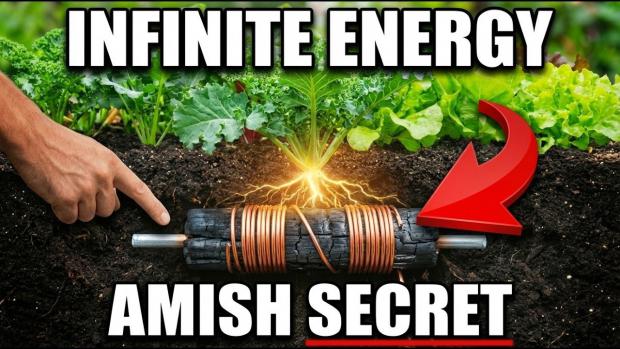
What if you could build a garden bed that waters itself, heats itself, and generates its own electricity using just a dead log, some crushed charcoal, and scrap metal? For centuries, farmers and scientists have documented three incredible methods for supercharging soil. These include the German tradition of hugelkultur, the ancient Amazonian secret of terra preta, which utilizes biochar, and the Victorian-era earth battery made of copper and zinc.
When combined, these three forgotten techniques create a permanent, self-feeding system underground. This living machine pulls carbon from the atmosphere, captures and holds soil nutrients, and produces measurable electrical current that roots actively navigate toward. So why isn't this taught in agricultural programs? A permanent, practically free solution doesn't generate repeat revenue for the multi-billion dollar fertilizer and pesticide industries. This documentary reveals how to stack these three suppressed sciences in your own backyard for under ten dollars.