










Breaking News
 John Bolton Pleads Guilty To Retaining National Security Information
 Can Two Hours Of School Really Be Enough? | MacKenzie Price #491 | The Way I Heard It
 Tucker Carlson: "This World Is Not Run By Humans!" Trump Has Supernatural Powers
 How They're Building an Off-Grid Community in the Private Realm (Trust + PMA + Ministry)
Top Tech News
 'Groundbreaking' Potential Lupus Cure Sends Patients into Remission, Allowing Dreams...
 Speculations on What Could Show Physics Beyond the Standard Model
 SpaceX Orbital Travel and Orbital Hotels Need Starfall – Getting Back Safe and Cheap is Exciting
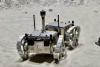 Lizard-inspired wiggly wheels let Mars rover swim through sand
 Fact Sheet: President Donald J. Trump Ushers in the Next Frontier of Quantum Innovation
 Researchers at Johns Hopkins University just let an AI-guided robot remove a dead pig's gallblad
 World's first consumer wing-in-ground effect aircraft takes flight
 America's Military Readiness Depends On Deployable Nuclear Power
 License Plate Cameras Are About To Start Tracking A Lot More Than Just Your Car
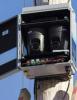 Heads up: Apparently the government is hiding cameras inside fake utility boxes



Headlight projectors turn your car into a drive-in theater
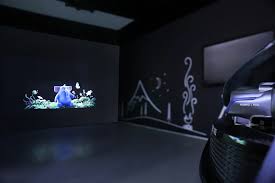
Smart headlights have been creeping toward this future for the better part of a decade. We've previously covered Mercedes' early Digital Light concept that projected street signs and markings onto the road, as well as the Maybach version that packed a million pixels into each lamp for driver-assist graphics. Those systems were monochrome, though, and focused solely on driving.
Huawei's pitch is different. Shown off at the Beijing Auto Show alongside its Qiankun technology conference, the new XPixel platform is the first car-headlight system to do full-color projection. Think welcome-mat light shows in your driveway, a Tron-style grid on the garage floor for your kids, or an outdoor film night thrown straight from the hood of the car.
Under the skin, XPixel is a high-resolution, pixel-controlled LED headlight platform that Huawei has been shipping in a monochrome form for around three years (it already appears in vehicles like the Stelato S9). The new generation adds full RGB output on top of Huawei's adaptive lighting stack, enabling what Huawei calls an "open-air cinema" mode that can throw a roughly 100-inch image onto any nearby wall with surprisingly crisp clarity.
Demos at the show ran the gamut from movies and video clips to live soccer matches, navigation arrows, and turn-by-turn cues painted directly onto the road. Huawei's own automotive optics materials describe the module as a "three-in-one" smart car-light unit that combines illumination, projection, and color output, paired with a high-precision ADB (adaptive driving beam) system for finer-grained masking around other road users.
It's not all party tricks, either. Huawei says the headlights can intelligently shift color temperature in rain or fog to improve light penetration and visibility, and the system supports "lighting carpet" effects that follow the curve of the road, plus driving-assist light signals to communicate silently with other drivers and pedestrians.
Huawei hasn't put a standalone price on XPixel (it's sold to automakers rather than consumers) but the company has confirmed that the full-color version will debut in an upcoming version of the Aito M9, the self-driving electric SUV that Huawei has co-developed since 2023.
The bigger picture is what's interesting here. Western automakers have spent years trickling pixel-headlight features out cautiously, partly because regulations in markets like the US have historically been slow to allow adaptive driving beams in the first place. Meanwhile, Chinese EV brands – buoyed by suppliers like Huawei – are skipping straight past the cautious phase and into headlights that double as projectors and infotainment surfaces. Whether XPixel is the future of automotive lighting or just an extremely flashy waypoint, it's a strong sign that the humble headlight is about to become one of the more expressive parts of the car.