










Breaking News
 The Real Cost of Supporting the Zionist Secular State of Israel
 Treasury Yield 30 Years (^TYX)
 Apoplectic Netanyahu rages at Trump in private as 'disastrous' Iran deal leaves him longing.
 The American Consumer Is Piss Broke
Top Tech News
 Elon and SpaceX Have Made AI Training 10 Times Faster
 Oklo COO Says Nuclear Waste Could Power America For 150 Years
 SpaceX Announces LARGEST Starship Mission Ever! They've never done this before!
 Cars Are Fast Becoming Dystopian Prison Pods...
 Our Emergency Water Plan Wasn't Good Enough - So We Built This
 Sodium Ion Batteries Can Reach 100 Gigawatt Per Hour Per Year Scale in 2027
 Juiced Bikes proves capable electric motorcycles don't have to cost a lot
 Headlight projectors turn your car into a drive-in theater
 US To Develop Small Modular Nuclear Reactors For Commercial Shipping
 New York Mandates Kill Switch and Surveillance Software in Your 3D Printer ...



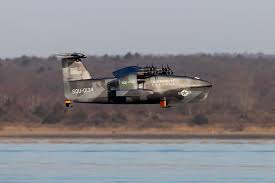
Autonomous wing-in-ground effect aircraft has US military in its sights
If you've been following the news out of military circles lately, one thing that stands out as a common trend is that the Western powers are reacting to the current geopolitical situation by initiating major rearmament drives intended to not only reequip and modernize their forces, but to do so as fast as possible.
Part of this effort involves not only investing in flashy things like lasers and missiles or vitally mundane tasks like building up stockpiles of munitions and spares, it also includes adapting new or previously overlooked technologies to speed up and improve the resilience of logistical systems that keep soldiers supplied in the field.
REGENT's Squire project combines three technologies in hopes of giving the US military an advantage in the logistical realm – autonomous flight systems, Wing-in-Ground (WIG) Effect, and electric propulsion.
Since 2020, the company has been working on an electric fixed-wing aircraft that exploits the WIG Effect to create a craft that flies at an altitude that is about equal to or less than half the length of its wingspan. When it does this, drag is reduced significantly as the proximity to the ground disrupts the formation of vortices at the wingtips. However, the party piece is that the air trapped under the wing creates a high-pressure cushion effect with a lift-to-drag ratio beyond that of a conventional aircraft.
The upshot is that a WIG aircraft can carry heavier payloads over greater ranges than conventional craft as it skims over open ground or water. This is especially important for electrically powered craft that have notoriously short range.