










Breaking News
 How Blockades Affect Economic Stability and Growth
 SHOCKING SYMBOLISM on 2026 US Dime, I got Chills.
The World We Knew Is Gone Forever!
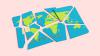 The funding engine of the entire global financial system is breaking.
Top Tech News
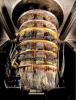 The Most Dangerous Race on Earth Isn't Nuclear - It's Quantum.
 This Plasma Stove Cooks Hotter Than The Sun
 Energy storage breakthrough traps sunlight in a molecule
 Steel rebar may have met its match – in the form of wavy plastic
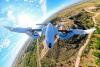 Video: Semicircular wings give Cyclone VTOL a different kind of lift
 After 20 Years, Wave Energy Finally Works
 FCC Set To "Supercharge" Starlink Space Internet With "Seven-Fold More Capacity"
 'World's First' Humanoid Robot For Real Household Chores Launched With 16-Hour Battery
 XAI Training 10 Trillion Parameter Model – Likely Out in Mid 2026
 The $7 Powder That Beats Your $5,000 AC Unit!



Anthropic's Nuclear Bomb
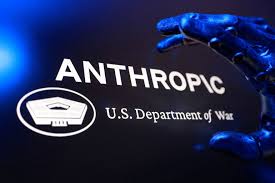
My research traced Chinese state-sponsored cyber campaigns against U.S. critical infrastructure and found that the barrier between nation-state-level hacking and everyone else was eroding far too fast.
By the time I closed my laptop that afternoon, Mythos had shattered that barrier. This new model could theoretically autonomously exploit previously unknown vulnerabilities in virtually every major operating system and web browser on Earth, without human supervision. My threat model, seemingly alarmist at breakfast, was too conservative by dinner.
For years, Anthropic's CEO Dario Amodei has kept copies of Richard Rhodes' The Making of the Atomic Bomb on the company's coffee tables, pressing the book on employees and interviewers alike. His thesis was that the scientists who built the most transformative weapon in history also failed to control how it would be used.
Mythos is Anthropic's nuclear moment. Not in destructive equivalence, since no zero-day exploit has killed people at the scale of a nuclear weapon, but in the sense Amodei suggests: a weapon with a seismic destructive capability that its makers may be unable to control.
The atomic bomb was not just a "bigger bomb." Nuclear weapons transformed coercion logic, allowing any state with such weapons to coerce other states in a way that, historically, would only have been possible by defeating them in battle. Mythos promises nearly anyone a coercive power, which, until recently, was the domain of only the strongest governments. The model erases the "state actors" premise in the U.S. doctrine of persistent engagement, wherein rival states' network penetrations are stabilized by U.S. counter-penetrations. It is a recipe for chaos and asymmetry in the wielding of cyber power.