










Breaking News
 Iran signals re-closure of Hormuz as it rejects uranium transfer abroad
 Goodbye leather bondage gear, hello traditional nuclear family…
 10 Essential Barter Items When the Grid Goes Dark
 The Number of Dead Iranian Protesters Keeps Changing Because It's a Fictional Story
Top Tech News
 Researchers Turn Car Battery Acid and Plastic Waste into Clean Hydrogen and New Plastic
 'Spin-flip' system pushes solar cell energy conversion efficiency past 100%
 A Startup Has Been Quietly Pitching Cloned Human Bodies to Transfer Your Brain Into
 DEYE 215kWh LiFePO4 + 125,000W Inverter + 200,000W MPPT = Run A Factory Offgrid!!
 China's Unitree Unveils Robot With "Human-Like Physique" That Can Outrun Most People
 This $200 Black Shaft Air Conditions Your Home For Free Forever -- Why Is It Banned in the U.S.?
 Engineers have developed a material capable of self-repairing more than 1,000 times,...
 They bypassed the eye entirely.
 The Most Dangerous Race on Earth Isn't Nuclear - It's Quantum.
 This Plasma Stove Cooks Hotter Than The Sun


Is America On The Verge Of A Nuclear Renaissance?
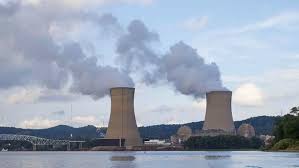
It has been more than seven years since President Donald Trump signed the Nuclear Energy Innovation and Modernization Act (NEIMA) into law – and it has taken all seven years (including four during the Biden Administration) for the Nuclear Regulatory Commission to issue a final rule implementing its provisions.
Even the Washington Post admits that the new Part 53 rules, intended to reduce review times from decades to 18 months or less, will make President Trump's goal of revitalizing the U.S. nuclear energy industry more competitive – "to everyone's benefit," says the Post.
The old NRC permitting review process was built around light-water-cooled reactors (like the Westinghouse AP1000) and included prescriptive safety requirements specific to those designs – not the advanced reactors of all sizes being planned and built today.
Many nuclear companies are designing reactors that use liquid metals (like molten salt) or gases as coolants, enabling them to operate at higher temperatures. These reactors are ultimately safer than the (still very safe) water-cooled reactors, as they rely on natural forces like gravity or convection rather than pumps and motors to automatically stop the reactor in case of an incident.
The NRC says its final rule responds to NEIMA by creating an alternative, technology-inclusive regulatory framework that can accommodate licensing of future commercial nuclear plants, including advanced reactor designs that may not employ light-water technology. The new rules will hopefully expedite permitting of small modular reactors, microreactors, and even full-size reactors already under development.
The NRC says its alternative requirements and implementing guidance incorporate technology-inclusive approaches and risk-informed and performance-based techniques to ensure an equivalent level of safety to that of operating commercial nuclear plants. Part 53 is designed to provide optionality and flexibility for licensing and regulating a variety of technologies and designs for commercial nuclear reactors.
Not everyone is convinced that an agency with a lifelong track record of thwarting nuclear reactor permits has fully reformed. Noting that the real timeframe for the Part 53 rules is decades (not just 7 years), nuclear energy advocate Steven Curtis says "It's hard to imagine the NRC being objective enough to lessen the burden for licensing, even for safer SMRs. The NRC sees its mortality in simplifying their process, so what is their incentive?"
NANO Nuclear Energy CEO James Walker calls the new Part 53 rules "a bridge to fleet deployment," in that it does not fully eliminate site-specific licensing, environmental review installation review, or lifecycle issues around refurbishment, refueling, decommissioning, and relocation," all needed for the microreactor industry. The NRC is reportedly developing guidance and another round of rulemaking – suggesting that Part 53 is foundational, not final.
The proof of a reformed NRC, if indeed it is now eager to move permits forward, will soon be made evident. Previous Presidents waited in vain. Trump waited 7 years for Part 53 regulations; the real microreactor rules have yet to be formally proposed.