










Breaking News
 The AI Bird-Flu Scenario They Just Published
 Japan's first robot ambulance works the 9-1-1 lines for humanoids
 Cheap smartphone add-on pinpoints hidden cameras to shut down spies
 The $600 Tank That Beats a $10,000 Powerwall
Top Tech News
 Terrifying AI Behavior Even Its Creators Couldn't Explain
 WW3 Near-Miss? AI Hallucinated Nuclear Weapons Components Aboard Chinese Vessel Bound For Iran
 Stripe Is Building the Toll Road for the Machine Economy
 Toyota Dakar hopeful swaps twin-turbo V6 for hydrogen fuel cells
 4-min turbo-inflatable cubic camp castle is now available in the USA
 Researchers Used Claude To Hack OpenAI Employee Accounts
 Chinese Scientists Develop New Oil Refining Method That Cuts Energy Use by 90%
 World's smallest CT scanner fits in the palm of your hand
 The Tesla Roadster will blow people's minds
 Peter Thiel-Funded Company Anduril to Triple the Number of Autonomous Surveillance Towers...



10 Essential Barter Items When the Grid Goes Dark
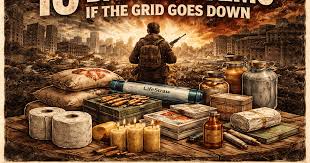
No hum of electricity. No glowing screens. No running water. No way to pay, no way to call for help, no way to rely on the systems that quietly hold modern life together.
At first, people would assume it's temporary. A few hours. Maybe a day.
But then the days stretch on.
Gas stations stop working. Grocery store shelves empty within hours. ATMs become useless boxes. Law enforcement is stretched thin. Fear begins to spread faster than any virus ever could.
And then comes the shift — the moment when people realize money no longer means anything.
Because in a world without infrastructure, cash is just paper.
That's when humanity reverts to something far older, far more primal:
Barter.
What Is Bartering, Really?
Bartering is as old as civilization itself. Long before banks, credit cards, or digital wallets, people survived by trading what they had for what they needed.
No currency. No middleman. Just value for value.
You have eggs. Someone else has vegetables. You trade.
You know how to fix a roof. Someone else has firewood. You negotiate.
In its simplest form, barter is about mutual need. But in a crisis, it becomes something much deeper — a system driven by urgency, scarcity, and sometimes desperation.
Because when survival is at stake, the rules change.
The Dark Side of Barter
Let's not romanticize this.
Bartering in a post-collapse world wouldn't look like a friendly farmer's market.
It would be unpredictable. Unequal. Sometimes dangerous.
People would lie. Steal. Manipulate. And in the worst cases, exploit others who have nothing left to trade except their labor… or themselves.
Communities might protect each other, yes. But outsiders? Strangers?