










Breaking News
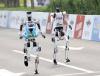 Robot smashes human record in half-marathon – as another self-destructed
 Paula R-AI-dcliffe! Watch the moment a robot wins the Beijing half marathon...
 Jude Law is praised for 'Oscar-worthy' depiction of Vladimir Putin in The Wizard of the Krem
 Trump's shocking Iran nuclear retreat after screaming at top generals in hours-long meltdown
Top Tech News
 Researchers Turn Car Battery Acid and Plastic Waste into Clean Hydrogen and New Plastic
 'Spin-flip' system pushes solar cell energy conversion efficiency past 100%
 A Startup Has Been Quietly Pitching Cloned Human Bodies to Transfer Your Brain Into
 DEYE 215kWh LiFePO4 + 125,000W Inverter + 200,000W MPPT = Run A Factory Offgrid!!
 China's Unitree Unveils Robot With "Human-Like Physique" That Can Outrun Most People
 This $200 Black Shaft Air Conditions Your Home For Free Forever -- Why Is It Banned in the U.S.?
 Engineers have developed a material capable of self-repairing more than 1,000 times,...
 They bypassed the eye entirely.
 The Most Dangerous Race on Earth Isn't Nuclear - It's Quantum.
 This Plasma Stove Cooks Hotter Than The Sun


Gulf poised to move closer to China after the war
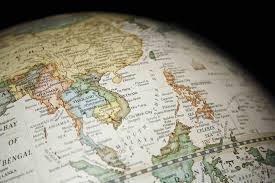
The Iran war has delivered a profound and systemic shock to the Gulf, fundamentally challenging two assumptions that have underpinned regional stability for the better part of a century.
For decades, the Gulf's economic model thrived on a perception of stability, reinforced by push factors like tax exemptions, flexible regulatory regimes and a dynamic, diversified start-up ecosystem.
Simultaneously, the region's security architecture rested on a traditional oil-for-security arrangement, maintained by a dense network of American military bases and hardware.
Yet, both pillars have been materially weakened by nearly two months of war, during which missile and drone strikes have targeted all Gulf states. This reality has ushered in a painful phase of strategic reassessment of Washington's reliability as a security guarantor, forcing regional capitals to look toward the East with newfound urgency.
In this post-war period, a turn toward diversification appears not only plausible but increasingly necessary for survival. China, whose economic footprint in the Gulf has expanded significantly through trade, investment, and infrastructure engagement, stands out as the most logical partner for deepening ties.
While the relationship is not without its limitations, the sheer scale of Chinese economic involvement provides a gravity that is becoming impossible to ignore. In 2023, following Xi Jinping's landmark visit to Riyadh for the Gulf Cooperation Council (GCC) Summit, the partnership began to manifest as a comprehensive strategic alignment.
Last year, multilateral trade between China and the GCC reached approximately US$300 billion, underscoring China's position as the region's primary trading partner. While historically these investments remained limited to the energy sector and port projects, the post-war environment is pushing both sides to explore much deeper integration.
The future of this economic partnership is likely to be defined by three critical sectors where Chinese dominance and Gulf capital find a natural synergy. The first is green energy, a field where China is currently the undisputed leader, having over 80% of the global solar manufacturing capacity.
China's exports of wind turbine generators jumped about 50% in 2025, and its dominance in the EV market, which now accounts for 70% of global production, aligns with the long-term objectives of Gulf nations trying to transition away from hydrocarbon reliance.
For the Gulf, partnering with Chinese firms is about securing the technology needed to transform their own power grids and transportation sectors with Chinese brands like BYD, Geely, and Changan.