










Breaking News
 Spain Mass Amnesty Has French Nationalists Calling For An End To Free Movement Of Non-EU...
 Eurosceptic Radev Wins Absolute Majority In Bulgarian Election
 The silent submarine hunter that could reshape future naval warfare
 The world's first AI art museum opening in USA - with 'Infinity room', 'machine hall
Top Tech News
 Researchers Turn Car Battery Acid and Plastic Waste into Clean Hydrogen and New Plastic
 'Spin-flip' system pushes solar cell energy conversion efficiency past 100%
 A Startup Has Been Quietly Pitching Cloned Human Bodies to Transfer Your Brain Into
 DEYE 215kWh LiFePO4 + 125,000W Inverter + 200,000W MPPT = Run A Factory Offgrid!!
 China's Unitree Unveils Robot With "Human-Like Physique" That Can Outrun Most People
 This $200 Black Shaft Air Conditions Your Home For Free Forever -- Why Is It Banned in the U.S.?
 Engineers have developed a material capable of self-repairing more than 1,000 times,...
 They bypassed the eye entirely.
 The Most Dangerous Race on Earth Isn't Nuclear - It's Quantum.
 This Plasma Stove Cooks Hotter Than The Sun


Focus on the Sixth Amendment
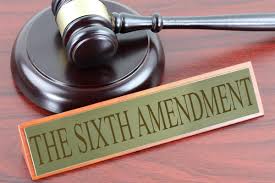
According to the Sixth Amendment, "in all criminal prosecutions, the accused shall enjoy the right to… be confronted with the witnesses against him." Known as the Confrontation Clause, these words embody a centuries-old common law tradition: criminal defendants should have the opportunity to test witness testimony through cross-examination. Without this trial right, a defendant could lose his or her case based on out-of-court statements wholly insulated from review. Current case law has weakened the right to confront witnesses, depriving defendants of a meaningful opportunity to ask questions and expose errors.
The Confrontation Clause bars certain out-of-court statements when the witness does not testify at trial and there is no opportunity for cross-examination. Although there are many situations in which different forms of out-of-court statements may be admissible, the circumstances triggering the Confrontation Clause often involve evidence that is high-stakes and accusatory. In these specific cases, a defendant's freedom is on the line, and the statements in question can have a disproportionate and decisive impact in the absence of cross-examination.
Compared to other criminal justice topics such as qualified immunity and civil asset forfeiture, this issue receives far less attention, even though the risk to a defendant's life, personal liberty, and property is great. The erosion of the Confrontation Clause deserves scrutiny, and the Supreme Court has recently signaled possible intervention to address the problem.
Over two decades ago, in Crawford v. Washington, the Supreme Court held that the Confrontation Clause applies to all out-of-court "testimonial" statements. This strengthened protections for defendants and overruled the prior, more lenient standard that allowed admission of statements if they were reliable.
At the time, Professor Richard D. Friedman wrote in the Cato Supreme Court Review that the decision was a "vindication of the rights of the accused" and "victory for fidelity to constitutional text and intent." However, he warned that the "impact of the opinion may be very different depending on whether the Supreme Court adopts a broad or narrow understanding of the term 'testimonial.'" This fear proved prescient and was borne out in subsequent cases where the justices adopted the "primary purpose" test to exempt statements made to assist in emergencies. Courts have continued to narrow the subset of statements deemed testimonial, beyond emergencies, and thus allow more out-of-court statements to impact a defendant's outcome.
The consequences can be severe. Consider the facts in a recent case, Franklin v. New York. Defendant Cid Franklin was awaiting arraignment after his arrest. Without his attorney present, an employee of the publicly funded Criminal Justice Agency asked him questions to make bail recommendations to the judge. At trial, prosecutors used the bail report as evidence of his guilt and did not provide him with a chance to cross-examine the report's author. The report was "central" to the prosecution's case, and a jury convicted Franklin. An appeals court affirmed, concluding that the bail report was written principally for administrative purposes rather than for use at trial.