










Breaking News
 The Man Who 'Discovered' Lyme Disease Was a Bioweapons Scientist And He Confessed
 RESCUE MISSION: Trump Admin Deploys U.S. Plane to Cuba to Rescue 10-Year-Old Utah Child...
 An "Extraordinarily Brilliant Person"
 A Secret Act of Judicial Tyranny
Top Tech News
 Researchers Turn Car Battery Acid and Plastic Waste into Clean Hydrogen and New Plastic
 'Spin-flip' system pushes solar cell energy conversion efficiency past 100%
 A Startup Has Been Quietly Pitching Cloned Human Bodies to Transfer Your Brain Into
 DEYE 215kWh LiFePO4 + 125,000W Inverter + 200,000W MPPT = Run A Factory Offgrid!!
 China's Unitree Unveils Robot With "Human-Like Physique" That Can Outrun Most People
 This $200 Black Shaft Air Conditions Your Home For Free Forever -- Why Is It Banned in the U.S.?
 Engineers have developed a material capable of self-repairing more than 1,000 times,...
 They bypassed the eye entirely.
 The Most Dangerous Race on Earth Isn't Nuclear - It's Quantum.
 This Plasma Stove Cooks Hotter Than The Sun


A Secret Act of Judicial Tyranny
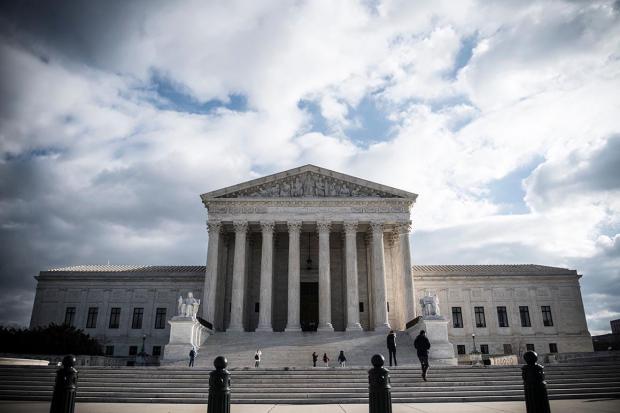
This reflects the basic math that five is a majority of nine. It also reflects the theory of realism in constitutional jurisprudence.
Realism, in this context, is the view that the Constitution is stagnant and unenforceable of its own existence. Realism teaches that the Constitution is only enforceable when the government voluntarily complies with it or the justices contemporarily interpret it.
Realism is confronted by its archnemesis, Originalism.
Originalism — and its sister Textualism — teaches that the Constitution means today what the ratifiers understood it to mean in the era of ratification, roughly 1787 to 1789. This theory posits that since the Constitution is the supreme law of the land, it cannot change over time. If it does, it is not supreme, but rather subordinate to any five members of the Supreme Court.
Both theories recognize that except for a few narrow constitutionally mandated areas, the Supreme Court does not have original jurisdiction. It can only hear appeals of cases that originated in lower federal or state courts.
The modern-day champion of Originalism was the late Justice Antonin Scalia. He argued strenuously that the court must be subordinate to the understanding of the folks who ratified the Constitution. Since they ratified words, they must be presumed to have understood and willed the plain meaning of those words.
When he began to articulate Originalism, Justice Scalia was a lone voice. Forty years later, and after more than a quarter century on the nation's highest court, his many acolytes can be found in legal academia and in lower federal courts. Two of those acolytes currently sit on the Supreme Court; Justices Neil Gorsuch and Amy Coney Barrett.
Yet, we learned just last week that the final vote Justice Scalia cast on the court, the day before he died, might very well have undermined Originalism in a way he could never have imagined and would not knowingly have done.
Here is the back story.
Reporters for The New York Times recently acquired a treasure trove of documents in which the justices communicated with each other in February 2016. The documents are notes and letters they sent to each other from various vacation locations; all at the prompting of Chief Justice John Roberts. The chief wanted the court to do something it had never done before — to rule on a case not before it, and to do so without full briefing by the lawyers for the litigants, without oral argument, without a conference by the justices, and to do so in a hurry.