










Breaking News
 When the Cost of Truth Is High, We–and AI–Lie
 There is Nothing Social About Your Social Contract: Why Coercion Can Never Create Harmony
 Into Technocracy: The Tokenization Chokepoint
 How to be Mentally Resilient During Hard Times
Top Tech News
 The $5 Battery That Never Dies - Edison Buried This 100 Years Ago
 That is not a real fish. IT'S A ROBOT.
 Scientists Unveil Hemp Alternative to Plastic That Can Withstand Boiling Water...
 A Robot Economy: Who Gets Rich, Who Gets Left Behind
 Is Surveillance Pricing Ripping You Off? How to Stop Your Data from Being Used Against You
 Robot Dives 1.5 Miles, Maps French Shipwreck With 86,000 Images And Recovers Artifacts
 Brain-inspired chip could reduce AI energy use by 70%
 CANCER HAS BEEN CURED
 "This is the first synthetic species," microbiologist J. Craig Venter told 60 Minutes'
 Humanoid robots are hitting the factories at an increasing pace



After Bizarre CEO Interview On CNBC, Michael Burry Exits GameStop Position
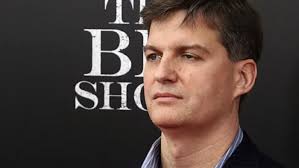
In a Monday post to his Substack subscribers, Burry said a potential $56 billion cash-and-stock acquisition would likely require too much debt and no longer aligned with his original thesis for GameStop. He had previously backed the company in 2019, a move that helped spark investor enthusiasm around the stock.
Burry wrote: "Wall Street does indeed mistake debt for creativity, and does so constantly. I of all people should have known."
GameStop reportedly offered $125 per eBay share — a deal far larger than GameStop itself.
Burry's decision comes after a bizarre interview between Gamestop CEO Ryan Cohen and CNBC yesterday morning that deepened doubts around GameStop Corp.'s proposed $56 billion bid for eBay.
In the 16-minute Squawk Box appearance, Cohen struggled to clearly explain how GameStop would fund a deal worth nearly five times its own market value.
Pressed by Andrew Ross Sorkin over a reported $16 billion financing gap, Cohen leaned on vague responses, pointing to the company's website and repeating that the offer was "half cash, half stock."
He noted GameStop had roughly $9.4 billion in cash and cited a financing letter from TD Securities for up to $20 billion, but failed to fully address how the numbers added up.
The interview grew more tense as CNBC hosts Becky Quick and Michael Santoli pressed Cohen on dilution concerns and the strategic logic behind the acquisition. Cohen argued the deal would help GameStop better compete with Amazon and said his incentives are tied to shareholder performance.
Clips of Cohen's pauses, evasive answers, and uneasy body language quickly spread online as shares fell and investors questioned whether the takeover bid was realistic.
Bloomberg writes that Burry also noted that this was his first stock sale since launching his newsletter. Separately, he disclosed a new bearish bet against the semiconductor sector through put options on the iShares Semiconductor ETF and said he significantly increased his stake in Lululemon.