










Breaking News
 Easter Island
 Bringing Back the EV "Credit"
 Quit Your 9–5 With Livestock? Here's How Many Animals You Need
 Report: Iran Caused Far More Damage to US Bases Than the Trump Administration Has Acknowledged
Top Tech News
 Wow. Researchers just built an AI that can control your body...
 Google Chrome silently installs a 4 GB AI model on your device without consent
 The $5 Battery That Never Dies - Edison Buried This 100 Years Ago
 That is not a real fish. IT'S A ROBOT.
 Scientists Unveil Hemp Alternative to Plastic That Can Withstand Boiling Water...
 A Robot Economy: Who Gets Rich, Who Gets Left Behind
 Is Surveillance Pricing Ripping You Off? How to Stop Your Data from Being Used Against You
 Robot Dives 1.5 Miles, Maps French Shipwreck With 86,000 Images And Recovers Artifacts
 Brain-inspired chip could reduce AI energy use by 70%
 CANCER HAS BEEN CURED


Catch Stunning Views of Venus and Jupiter as They Align with the Crescent Moon in Mid-May
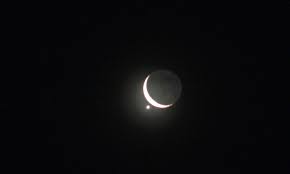
Jupiter, which has been shining brightly for months, and has been visible with both binoculars and the naked eye, will sit in the highest position of this stellar skewer.
Between May 18th and 20th when it lines up with Venus and Mercury, one will find our solar system's largest planet in the western sky near the twin stars of Pollux and Castor, also known as Gemini.
Roughly one-third the way up from the western horizon to the top of the sky, the weak moon will permit dazzling views of Jupiter with a telescope, in which the planet's cloud pattern and satellites like Io and Ganymede will be visible.
Lower in the western sky will be Venus, shining some 700% brighter than far away Jupiter. On May 18th, it will be positioned slightly higher and to the left of a slender crescent Moon.
Space.com's Joe Rao writes of Venus that even with the naked eye, reflections of light off the Earth—known as Earthshine, "will make the view seem almost three-dimensional."
All of this will be best viewed between sunset and midnight, meaning that one doesn't even have to ruin their sleep schedule to enjoy the celestial show.