










Breaking News
 The Next Pandemic: Hantavirus? (from 2021)
 He's taking over
 Kevin Warsh Cleared By Senate For 14?Year Fed Board Seat
 BlackRock's stablecoin loophole
Top Tech News
 US To Develop Small Modular Nuclear Reactors For Commercial Shipping
 New York Mandates Kill Switch and Surveillance Software in Your 3D Printer ...
 Cameco Sees As Many As 20 AP1000 Nuclear Reactors On The Horizon
 His grandparents had heart disease.
At 11, Laurent Simons decided he wanted to fight aging.
His grandparents had heart disease.
At 11, Laurent Simons decided he wanted to fight aging.
 Mayo Clinic's AI Can Detect Pancreatic Cancer up to 3 Years Before Diagnosis–When Treatment...
A multi-terrain robot from China is going viral, not because of raw speed or power...
 The World's Biggest Fusion Reactor Just Hit A Milestone
 Wow. Researchers just built an AI that can control your body...
 Google Chrome silently installs a 4 GB AI model on your device without consent
 The $5 Battery That Never Dies - Edison Buried This 100 Years Ago



Bringing Back the EV "Credit"
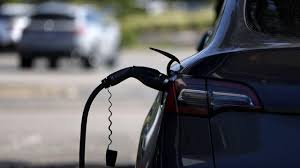
Since the Chinese are coming – more finely, Chinese EVs are coming – some are arguing for an American "industrial policy" that would include resurrecting federal tax credits and other such subsidy mechanisms to prop up the sales of American EVs, which are already in freefall (even before the inevitable influx of cheap, Chinese-made EVs).
The chickens are, as they say, coming home to roost.
Back in the '90s, the decision was taken to grow the Chinese economy by transferring the U.S. economy to China. More finely, to transfer the productive manufacturing economy to China. Americans were told they'd get cheaper stuff in return – and they did. What they were not told is how much it would cost them. Fast forward thirty years and Chyna is now a manufacturing powerhouse. It is not Communist, either – other than in name only. It is corporatist – state and corporate power fused as one. It is the new business – for the world.
Chinese EVs are cheap – relative to the cost of EVs made elsewhere – because the Chinese state subsidizes the manufacturing of EVs and also the powering of them, via state-supported infrastructure. That is the business model that some urge be adopted here and they have already gotten their wish because to some extent it already is the business model. The only reason there are any EVs for sale in this country is because the state effectively demanded their manufacture and protected their manufacture – just as has been done in China, only to an incomplete extent. Which is why the initial push has failed. In the United States, people were still allowed to not buy EVs – and that's what 92 percent of them didn't do.
EVs never achieved higher than a roughly eight percent "market" share – and almost all of that was concentrated in deeply blue urban hive areas, such as Los Angeles, San Diego, San Francisco and Washington, DC. Much of that was propped up by the $7,500 federal tax credit that was available to affluent people – you had to have paid a certain (large) sum in taxes to be eligible for the credit – and when that credit was rescinded, the EV "market" cratered. It is now less than 5 percent. Lucid – one of the highest-end EV "start ups" – is about to go belly up. Scout – VW's EV subsidiary – is likely to go belly up. Rivian continues to lose money. Ford and GM have lost enormous sums of money. Nissan is cancelling several devices it had planned to offer in the U.S. on account of their being no market for them. Not even Brie Larsen could sell the Ariya – an EV with a name that sounds like the war-cry of the Ewoks from Star Wars.