










Breaking News
 Today, May 11, is the deadline for the DOJ to indict Dr. Fauci
 Donald Trump posted a video about vaccines captioned "They're ALL poison. Every Single One!
 Uncovering the Lost Origin of the Arctic People
 Farmers are sounding the alarm - and nobody's listening.
Top Tech News
 New York Mandates Kill Switch and Surveillance Software in Your 3D Printer ...
 Cameco Sees As Many As 20 AP1000 Nuclear Reactors On The Horizon
 His grandparents had heart disease.
At 11, Laurent Simons decided he wanted to fight aging.
His grandparents had heart disease.
At 11, Laurent Simons decided he wanted to fight aging.
 Mayo Clinic's AI Can Detect Pancreatic Cancer up to 3 Years Before Diagnosis–When Treatment...
A multi-terrain robot from China is going viral, not because of raw speed or power...
 The World's Biggest Fusion Reactor Just Hit A Milestone
 Wow. Researchers just built an AI that can control your body...
 Google Chrome silently installs a 4 GB AI model on your device without consent
 The $5 Battery That Never Dies - Edison Buried This 100 Years Ago
 That is not a real fish. IT'S A ROBOT.


Cameco Sees As Many As 20 AP1000 Nuclear Reactors On The Horizon
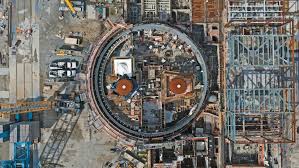
Grant Isaac, the Chief Operating Officer and President of Cameco, provided some color on the call for the difference between the different department efforts and the stages of discussions under each.
We covered the announcement from the DOC at length last fall, providing details on the $80 billion agreement between the US government, Brookfield and Cameco to deploy up to 10 AP1000 reactors across the US.
Few updates have been given to this program so far. But Isaac comments that the "project continues to move along". The efforts under the DOC contract appear to be focused on "long lead items that are required in order to stand" up a fleet of large reactors.
Considering the domestic and global supply chain outside of China and Russia has been more focused on sustainment and decommissioning, there is currently a lack of capacity across all the involved companies to build multiple reactors a year.
The sole-producer of the reactor cooling pumps for Westinghouse AP1000 reactor plants, Curtiss-Wright, recently remarked that they only have capacity to produce enough pumps for three to four reactors per year. Significant expansion efforts will be required to remove deployment roadblocks for multiple different systems and components.
Another question trying to be answered under the DOC program is under what model the reactors could be built. Isaac says. Isaac said, "those models could be a range of things from a federal build, own and operate to a federal build-own transfer model all the way to perhaps a financing of an existing nuclear operator who simply is just looking for financing."
But the ten large reactors being pursued under the DOC plan are apparently completely separate from as many as ten reactors that are being pursued under the DOE.
There are a number of utilities progressing towards the construction of pairs of AP1000 reactors, with "five or six of them in very advanced stages". These utilities are coordinating with the DOE and the Office of Energy Dominance Financing to secure loans for the projects, as well as potentially ordering long lead items ahead of time.
"So when you step back and look at it, the U.S. isn't just talking about potentially 10 reactors under the DOC program. They're potentially telling about another 10 under the DOE more traditional approach."