










Breaking News
 Trump's Approval Among Voters Has Stabilized, But Is That Enough To Boost GOP In Midterms?
 Courts Just Ruled the Gospel "Psychologically Harmful" -- and Pastors Are Being Told to Sh
 In a massive win, HHS Sec. Bobby Kennedy is moving to FORCE Big Healthcare to disclose...
 It Took 211 Years to Borrow $2.3 Trillion. Congress Just Did It in Twelve Months.
Top Tech News
 Seven apps. One craft
 SHOCK CASE REPORT: Advanced Alzheimer's Patient Regains Speech, Memory, Mobility...
 Most artificial limbs rely on silicone or plastic to mimic human hands.
 Flying cell tower beams phone signal to Japan from 10 miles up
 Chinese Commercial Reactor Achieves Nuclear Fusion with Clean Hydrogen-Boron Fuel
 Med Beds Just Took a MASSIVE Step Forward, Healing People in Days!
 Palmer Luckey: Autonomous Weapons Are Ancient and Why Anduril Won't Build Humanoids | EP #295
 A laser just photographed objects through six feet of concrete
 Elon Musk's Next-Gen Motor Destroy Entire EV Industry
 China's disputed satellite refueling heralds new space war era



Cancer Is a Parasite - Dr. William F. Supple Jr with Dr Sherri Tenpenny (May 14 @ 5 pm MDT)
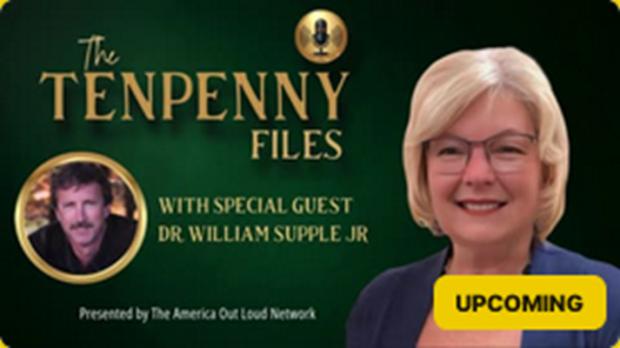
Cancer treatment became a trillion-dollar industry while one class of low-cost drugs sat buried in the medical literature for decades. Dr. William F. Supple joins Dr. Sherri Tenpenny to explain why anti-parasitic drugs like fenbendazole may be targeting cancer through mechanisms the public was never told about. His book Cancer Is a Parasite: Kill It with a Safe Over-the-Counter Anti-Parasitic Fenbendazole grew out of a personal crisis after his 83-year-old mother-in-law was sent home with terminal metastatic breast cancer and no realistic hope of survival.
What happened next forced him into years of research connecting parasites, chronic inflammation, cancer stem cells, tumor metabolism, and suppressed oncology science. Her tumors reportedly disappeared after using fenbendazole alone. Hospice was canceled. Her oncologist had no explanation. Four years later, she remains alive.
This conversation moves directly into the biological overlap between parasites and cancer cells. Dr. Supple explains why cancer may behave less like a random genetic accident and more like a parasitic process that hijacks the body's immune defenses, metabolic pathways, biological clocks, and survival systems. He breaks down why certain anti-parasitic drugs appear capable of damaging cancer cells without producing the catastrophic side effects associated with chemotherapy.
The discussion also explores why more than 120 countries routinely deworm their populations while wealthier nations do not, despite dramatically different cancer rates between those groups. Dr. Supple explains how chronic parasitic burden may contribute to chronic inflammation, immune exhaustion, and long-term cancer risk. He also addresses why researchers studying fenbendazole have faced suppression, retractions, and resistance despite growing case reports from terminal cancer patients.
Dr. Tenpenny and Dr. Supple discuss ivermectin, mebendazole, cancer stem cells, recurrence after chemotherapy, topical cancer applications, veterinary parallels, and the growing underground movement of patients self-treating after conventional medicine failed them.
The interview opens the door to a much larger question that extends far beyond one drug. Dr. Supple's book contains the deeper scientific framework, historical research, and biological mechanisms that could not fully fit into a single conversation. The implications reach into oncology, public health, chronic inflammation, environmental burden, and the future of cancer treatment itself.
This episode will challenge what you think cancer is.
Get William's book here: Cancer Is a Parasite: Kill It with a Safe Over-the-Counter Anti-Parasitic Fenbendazole