










Breaking News
 Trump is talking business in China, but Bannon has a very different message…
 Penn State Law rocked by secret audio exposing dark DEI agenda…
 The Nuclear Missile That Vladimir Putin Just Tested Could Destroy an Area the Size...
 Half a Million Waiting in Libya To Invade Europe
Top Tech News
 US To Develop Small Modular Nuclear Reactors For Commercial Shipping
 New York Mandates Kill Switch and Surveillance Software in Your 3D Printer ...
 Cameco Sees As Many As 20 AP1000 Nuclear Reactors On The Horizon
 His grandparents had heart disease.
At 11, Laurent Simons decided he wanted to fight aging.
His grandparents had heart disease.
At 11, Laurent Simons decided he wanted to fight aging.
 Mayo Clinic's AI Can Detect Pancreatic Cancer up to 3 Years Before Diagnosis–When Treatment...
A multi-terrain robot from China is going viral, not because of raw speed or power...
 The World's Biggest Fusion Reactor Just Hit A Milestone
 Wow. Researchers just built an AI that can control your body...
 Google Chrome silently installs a 4 GB AI model on your device without consent
 The $5 Battery That Never Dies - Edison Buried This 100 Years Ago



Friedrich A. Hayek on "The Meaning of Competition," 80 Years On
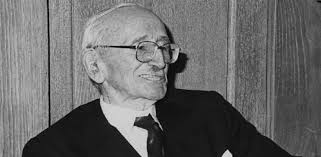
He lays out the premises of his argument on the first page:
It appears to be generally held that the so-called theory of "perfect competition" provides the appropriate model for judging the effectiveness of competition in real life and that, to the extent that real competition differs from the model, it is undesirable and even harmful. For this attitude there seems to me to exist very little justification. I shall attempt to show that what the theory of perfect competition discusses has little claim to be called "competition" at all and that its conclusions are of little use as guides to policy. (p. 92)
However, in spite of Hayek's argument, perfect competition has remained a central analytical benchmark for much of microeconomic theory and policy over these eight decades, behind notions of "market failure" that result in calls for government intervention and regulation. A main criticism of "capitalism" or the free-market economy, from the perfect-competition perspective, is the accusation of persistent imperfect knowledge and asymmetric information that prevents the market from properly reflecting "efficient" outcomes or distributive "social justice."
But before looking at Hayek's argument, it would be useful to take a brief excursion in the history of economic ideas to understand how the theory of perfect competition emerged and why it became the rationale for much of the interventionist state.
Adam Smith and the hubris of the social engineer
If by imperfect knowledge and asymmetric information we mean that different people know different things about the same things and different things about different things, then since the time of Adam Smith (1723–1790) economists have known that knowledge is diffused, decentralized, and diverse among all those who associate in the marketplace. In fact, this asymmetry in the knowledge and information possessed by different people was a central element in the case for free markets over government regulation, control, and planning.
In one of the most famous passages in The Wealth of Nations (1776), Adam Smith said:
What is the specie of domestic industry which his capital can employ, and of which the produce is likely to be of the greatest value, every individual, it is evident, can, in his own situation, judge much better than any statesman or lawgiver can do for him….