










Breaking News
 What Is Diatomaceous Earth? - Dr. Berg
 AI Data Center Backlash | The HighWire Episode 477
 THE FIX IS IN: Democrat LA Mayor Candidate Nithya Raman SURGES in Latest Ballot Dump Putting...
 The Market Is Starting To Price In Something Most People Still Don't See
Top Tech News
 World's longest-range airliner takes to the skies
 Batteries That Use Sodium Instead of Lithium Could Be Low-Cost Rival to Tesla's
 Elon and SpaceX Have Made AI Training 10 Times Faster
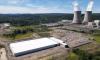 Oklo COO Says Nuclear Waste Could Power America For 150 Years
 SpaceX Announces LARGEST Starship Mission Ever! They've never done this before!
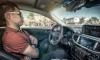 Cars Are Fast Becoming Dystopian Prison Pods...
 Our Emergency Water Plan Wasn't Good Enough - So We Built This
 Sodium Ion Batteries Can Reach 100 Gigawatt Per Hour Per Year Scale in 2027
 Juiced Bikes proves capable electric motorcycles don't have to cost a lot
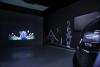 Headlight projectors turn your car into a drive-in theater


Venus, Jupiter and Mercury headline a stunning planet parade through June. Here's when to see it
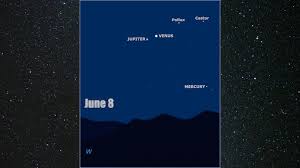
The June evening sky this year is exceptionally interesting.
A spectacular gathering of three planets, two bright stars, plus, later this month, a slender crescent moon, will be the chief celestial attraction in the evening sky during the next few weeks. It will, in fact, be possible for anyone with a clear and unobstructed view of the western sky to see all three planets at a single glance.
And two of these planets — Venus and Jupiter — are by far the brightest of those that are readily visible with the unaided eye. In fact, on one particular evening, Tuesday, June 9, these two worlds will seem to "call attention to themselves," even to those who normally do not look up into the night sky.
Jupiter and Venus draw together
No doubt during the past week or so, even casual sky watchers have already taken note of Venus and Jupiter in the guise of two very bright "stars" that have been evident in the west-northwest sky for at least a couple of hours after sunset.
Both shine with a silvery-white luster and one — Venus — appears considerably brighter. And especially noticeable over the course of recent nights is that they seem to be drawing closer to each other. In fact, at this moment in time, from our earthly viewpoint, they literally are like two celestial ships passing in the night. Jupiter will appear about one-seventh as bright as Venus.
On June 7, the two planets will appear side-by-side as they descend toward the horizon, with Jupiter on the left and Venus on the right. They'll be separated by 2.3 degrees. On June 8, Venus will have moved to the upper right of Jupiter, the gap between them having been reduced to 1.8 degrees.
As we have just noted, the two planets will appear closest on June 9. The actual closest approach, with Venus sliding just 1.6 degrees above (north) of Jupiter, will take place at 12 hours Universal Time (UT), which is during the daytime for North America. At that time, just over three times the apparent width of the full moon will separate these two planets. Nonetheless, even though they will already be in the process of slowly separating as darkness falls later that evening, the two planets will still appear practically as close as they were just hours before.