










Breaking News
 What Is Diatomaceous Earth? - Dr. Berg
 AI Data Center Backlash | The HighWire Episode 477
 THE FIX IS IN: Democrat LA Mayor Candidate Nithya Raman SURGES in Latest Ballot Dump Putting...
 The Market Is Starting To Price In Something Most People Still Don't See
Top Tech News
 World's longest-range airliner takes to the skies
 Batteries That Use Sodium Instead of Lithium Could Be Low-Cost Rival to Tesla's
 Elon and SpaceX Have Made AI Training 10 Times Faster
 Oklo COO Says Nuclear Waste Could Power America For 150 Years
 SpaceX Announces LARGEST Starship Mission Ever! They've never done this before!
 Cars Are Fast Becoming Dystopian Prison Pods...
 Our Emergency Water Plan Wasn't Good Enough - So We Built This
 Sodium Ion Batteries Can Reach 100 Gigawatt Per Hour Per Year Scale in 2027
 Juiced Bikes proves capable electric motorcycles don't have to cost a lot
 Headlight projectors turn your car into a drive-in theater


August 2026 lunar eclipse: Everything you need to know about the 96% 'blood moon'
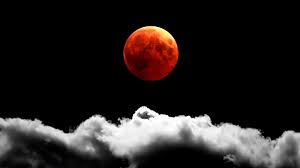
On Aug. 27-28, 2026, a very deep partial lunar eclipse will be visible from Europe, Africa, North America and South America, with just over 96% of the moon passing into Earth's shadow.
Lunar eclipses happen when Earth is between the sun and a full moon. During the event, the moon moves through Earth's umbra, the dark center of its shadow.
The best views of the August 2026 partial lunar eclipse will be from North and South America. According to Time and Date, about 12% of the world's population — 987 million people — will see all phases of the eclipse (penumbral and partial), while around 16% — 1.3 billion — will see all of the partial phase. Viewing conditions will depend on the local weather, with western U.S. states, northern Chile and inland Brazil statistically offering the best odds of clear skies.
The Aug. 27-28, 2026, event will be the first deep partial lunar eclipse anywhere in the world since Sept. 18, 2024, and the last until Jan. 11-12, 2028 (when only 2.4% of the moon will be in Earth's umbral shadow). As such, 2026's partial lunar eclipse will be the most impressive lunar eclipse until a total lunar eclipse on Dec. 31, 2028.
During the August 2026 eclipse, the full "Sturgeon Moon" will rise and, later that night, pass into Earth's umbral shadow. As it does, the full moon will dim and, as the partial eclipse reaches its peak, look slightly reddish-orange. However, it won't be a true "blood moon" because at no point will there be lunar totality — when the entire lunar surface falls under Earth's shadow. The eclipse — including both the slight penumbral (when the moon drifts into Earth's fuzzy outer shadow) and partial phases — will last 5 hours, 38 minutes.
This partial lunar eclipse will occur just over five days after the moon reaches apogee — its farthest point from Earth on its slightly elliptical orbit — making it of average apparent size.
Lunar eclipses occur at the same universal time worldwide, but the local clock time and whether the moon is above the horizon vary by location. This one will happen between 9:23 p.m. EDT on Thursday, Aug. 27, and 3:01 a.m. EDT on Friday, Aug. 28 (0123 and 0701 GMT on Friday, Aug. 28, 2026) with the peak of the event — when 96.2% of the lunar surface will appear reddish — happening at 0412 GMT. That translates to the following local times in North America:
Eastern time: 12:12 a.m. EDT on Friday, Aug. 28, 2026
Central time: 11:12 p.m. CDT on Thursday, Aug. 27, 2026
Mountain time: 10:12 p.m. MDT on Thursday, Aug. 27, 2026
Pacific time: 9:12 p.m. PDT on Thursday, Aug. 27, 2026
Alaska time: 8:12 p.m. AKDT on Thursday, Aug. 27, 2026
These are the times for maximum eclipse only. However, it's worth looking at the moon about 39 minutes before these times to see the edge of Earth's shadow inch across the lunar surface as the partial phase builds (and vice versa after maximum eclipse).